Sambar (dish): Difference between revisions
CSV import Tags: mobile edit mobile web edit |
CSV import |
||
| Line 22: | Line 22: | ||
[[Category:Vegetarian dishes]] | [[Category:Vegetarian dishes]] | ||
{{food-stub}} | {{food-stub}} | ||
<gallery> | |||
File:Pumpkin_sambar.JPG|Pumpkin sambar | |||
</gallery> | |||
Latest revision as of 11:23, 25 February 2025

Sambar is a popular South Indian and Sri Lankan dish. It is a type of lentil-based vegetable stew or chowder, cooked with pigeon peas and tamarind broth. It is a staple in the diets of people from the Tamil Nadu, Kerala, Karnataka, and Andhra Pradesh regions of India, as well as in Sri Lanka. Sambar is reflective of a broad and ancient tradition of lentil-based dishes in South Indian cuisine, and its origins are steeped in regional folklore and culinary history.
Ingredients and Variations[edit]
The primary ingredient in sambar is the pigeon pea (Cajanus cajan), also known as toor dal or arhar dal. The dish is flavored with a variety of spices and herbs, including mustard seeds, cumin, coriander, fenugreek, and asafetida, as well as curry leaves. A distinctive feature of sambar is its use of tamarind pulp for its base, which gives the dish its tangy flavor. Vegetables commonly used in sambar include okra, tomato, potato, carrot, pumpkin, and eggplant, among others.
There are numerous regional variations of sambar across South India, each with its unique recipe and taste. For instance, Tamil Nadu's version of sambar, often called 'Tamil Sambar', uses a specific spice blend known as sambar powder, which gives it a distinct flavor. In contrast, Karnataka's version, known as 'Karnataka Sambar', might include a different set of vegetables and a slightly sweeter taste due to the addition of jaggery.
Cultural Significance[edit]
Sambar is more than just a culinary dish; it is an integral part of South Indian and Sri Lankan culture. It is served in almost every meal, including breakfast, lunch, and dinner, and is a crucial part of both everyday meals and festive occasions. In Tamil culture, sambar is often served alongside idli, dosa, and rice, making it a versatile and ubiquitous presence in South Indian cuisine.
Preparation[edit]
The preparation of sambar involves cooking the pigeon peas until they are soft and then adding the tamarind juice and a mixture of cooked vegetables. The spices and herbs are typically tempered in oil and then added to the stew. The dish is simmered until the flavors meld together, resulting in a flavorful and comforting stew.
Nutritional Value[edit]
Sambar is considered a healthy dish due to its high protein content from the lentils and the variety of vegetables included. It is rich in dietary fiber, vitamins, and minerals, making it a nutritious addition to any meal.
In Popular Culture[edit]
Sambar has transcended its regional origins to become a beloved dish across India and in other parts of the world where South Indian and Sri Lankan diasporas reside. Its popularity is a testament to the rich culinary tradition of South India and its ability to adapt and appeal to a wide range of tastes and preferences.

-
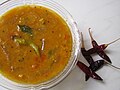 Pumpkin sambar
