Malaria antigen detection tests: Difference between revisions
CSV import |
CSV import |
||
| (One intermediate revision by the same user not shown) | |||
| Line 1: | Line 1: | ||
==Malaria Antigen Detection Tests== | |||
Malaria antigen detection tests are diagnostic tools used to identify the presence of [[malaria]] parasites in the blood. These tests are crucial for the timely diagnosis and treatment of malaria, a disease caused by [[Plasmodium]] parasites transmitted through the bites of infected [[Anopheles]] mosquitoes. | |||
Malaria antigen detection tests | |||
==Types of Malaria Antigen Detection Tests== | ===Overview=== | ||
Malaria antigen detection tests, also known as rapid diagnostic tests (RDTs), detect specific proteins (antigens) produced by malaria parasites. These tests are designed to provide quick results, often within 15-30 minutes, and are particularly useful in settings where [[microscopy]] is not available. | |||
===Types of Malaria Antigen Detection Tests=== | |||
There are several types of malaria antigen detection tests, each targeting different antigens: | There are several types of malaria antigen detection tests, each targeting different antigens: | ||
* ''' | * '''Histidine-rich protein 2 (HRP2) tests''': These tests detect the HRP2 antigen, which is produced by [[Plasmodium falciparum]], the most deadly malaria parasite. | ||
* ''' | * '''Plasmodium lactate dehydrogenase (pLDH) tests''': These tests can detect pLDH, an enzyme produced by all species of malaria parasites, including [[Plasmodium vivax]], [[Plasmodium ovale]], and [[Plasmodium malariae]]. | ||
* ''' | * '''Aldolase tests''': These tests detect aldolase, an enzyme present in all malaria parasites, and can be used to identify infections by any Plasmodium species. | ||
===Procedure=== | |||
The procedure for conducting a malaria antigen detection test is straightforward: | |||
1. A small blood sample is obtained, usually via a finger prick. | |||
2. The blood is applied to a test strip or cassette. | |||
3. A buffer solution is added to facilitate the reaction. | |||
4. The test is allowed to develop for the specified time, typically 15-30 minutes. | |||
5. The results are read visually, with the appearance of lines indicating the presence of malaria antigens. | |||
===Advantages=== | |||
Malaria antigen detection tests offer several advantages: | |||
* '''Rapid results''': These tests provide results much faster than traditional microscopy. | |||
* '''Ease of use''': They do not require specialized equipment or extensive training. | |||
* '''Portability''': The tests are compact and can be used in remote areas. | |||
== | ===Limitations=== | ||
Despite their advantages, malaria antigen detection tests have some limitations: | |||
* '''Sensitivity and specificity''': The accuracy of the tests can vary, particularly in detecting low levels of parasitemia. | |||
* '''HRP2 deletions''': Some [[Plasmodium falciparum]] strains have deletions in the HRP2 gene, leading to false-negative results. | |||
* '''Cost''': While generally affordable, the cost can be a barrier in resource-limited settings. | |||
== | ===Conclusion=== | ||
Malaria antigen detection tests are a valuable tool in the fight against malaria, providing rapid and accessible diagnosis. However, they should be used in conjunction with other diagnostic methods and clinical judgment to ensure accurate diagnosis and effective treatment. | |||
{{Malaria}} | |||
{{Infectious diseases}} | |||
[[Category:Malaria]] | [[Category:Malaria]] | ||
[[Category:Diagnostic tests]] | |||
[[Category:Infectious disease diagnosis]] | |||
== Malaria_antigen_detection_tests == | |||
<gallery> | |||
File:Diagnostic_Medical_Dipstick.png|Diagnostic Medical Dipstick | |||
File:Plasmodium_glutamate_dehydrogenase_precipitation.jpg|Plasmodium Glutamate Dehydrogenase Precipitation | |||
File:PLDH_Malaria_Antibodies.jpg|PLDH Malaria Antibodies | |||
</gallery> | |||
Latest revision as of 00:00, 25 February 2025
Malaria Antigen Detection Tests[edit]
Malaria antigen detection tests are diagnostic tools used to identify the presence of malaria parasites in the blood. These tests are crucial for the timely diagnosis and treatment of malaria, a disease caused by Plasmodium parasites transmitted through the bites of infected Anopheles mosquitoes.
Overview[edit]
Malaria antigen detection tests, also known as rapid diagnostic tests (RDTs), detect specific proteins (antigens) produced by malaria parasites. These tests are designed to provide quick results, often within 15-30 minutes, and are particularly useful in settings where microscopy is not available.
Types of Malaria Antigen Detection Tests[edit]
There are several types of malaria antigen detection tests, each targeting different antigens:
- Histidine-rich protein 2 (HRP2) tests: These tests detect the HRP2 antigen, which is produced by Plasmodium falciparum, the most deadly malaria parasite.
- Plasmodium lactate dehydrogenase (pLDH) tests: These tests can detect pLDH, an enzyme produced by all species of malaria parasites, including Plasmodium vivax, Plasmodium ovale, and Plasmodium malariae.
- Aldolase tests: These tests detect aldolase, an enzyme present in all malaria parasites, and can be used to identify infections by any Plasmodium species.
Procedure[edit]
The procedure for conducting a malaria antigen detection test is straightforward:
1. A small blood sample is obtained, usually via a finger prick. 2. The blood is applied to a test strip or cassette. 3. A buffer solution is added to facilitate the reaction. 4. The test is allowed to develop for the specified time, typically 15-30 minutes. 5. The results are read visually, with the appearance of lines indicating the presence of malaria antigens.
Advantages[edit]
Malaria antigen detection tests offer several advantages:
- Rapid results: These tests provide results much faster than traditional microscopy.
- Ease of use: They do not require specialized equipment or extensive training.
- Portability: The tests are compact and can be used in remote areas.
Limitations[edit]
Despite their advantages, malaria antigen detection tests have some limitations:
- Sensitivity and specificity: The accuracy of the tests can vary, particularly in detecting low levels of parasitemia.
- HRP2 deletions: Some Plasmodium falciparum strains have deletions in the HRP2 gene, leading to false-negative results.
- Cost: While generally affordable, the cost can be a barrier in resource-limited settings.
Conclusion[edit]
Malaria antigen detection tests are a valuable tool in the fight against malaria, providing rapid and accessible diagnosis. However, they should be used in conjunction with other diagnostic methods and clinical judgment to ensure accurate diagnosis and effective treatment.
| Malaria | ||||||||||
|---|---|---|---|---|---|---|---|---|---|---|
|
| Infectious diseases | ||||||||||
|---|---|---|---|---|---|---|---|---|---|---|
This infectious diseases related article is a stub.
|
Malaria_antigen_detection_tests[edit]
-
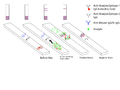 Diagnostic Medical Dipstick
 -
 Plasmodium Glutamate Dehydrogenase Precipitation
 -
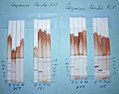 PLDH Malaria Antibodies


