Water resources: Difference between revisions
CSV import Tags: mobile edit mobile web edit |
CSV import |
||
| Line 37: | Line 37: | ||
{{Water-stub}} | {{Water-stub}} | ||
== Water resources == | |||
<gallery> | |||
File:Parinacota.jpg|Parinacota | |||
File:Sinclair_Wetlands.jpg|Sinclair Wetlands | |||
File:Groundwater_flow.svg|Groundwater flow | |||
File:Schematic_illustration_of_a_proposed_approach_for_capturing_moisture_above_the_ocean_surface_and_transporting_it_to_proximal_land_for_improving_water_security.webp|Schematic illustration of a proposed approach for capturing moisture above the ocean surface and transporting it to proximal land for improving water security | |||
File:Total_Renewable_Freshwater_Resources_in_mm_per_year_By_WaterGAP_Average_1961-1990.jpg|Total Renewable Freshwater Resources in mm per year By WaterGAP Average 1961-1990 | |||
File:Spatial_variability_of_water_yield_along_the_delineated_near-offshore_region_of_200_km_across_the_world.webp|Spatial variability of water yield along the delineated near-offshore region of 200 km across the world | |||
File:Drinking_water.jpg|Drinking water | |||
File:Water_pollution.jpg|Water pollution | |||
File:Global_Values_of_Water_Resources_and_Water_Use.jpg|Global Values of Water Resources and Water Use | |||
File:A_RES_71_313_E.pdf|A RES 71 313 E | |||
File:Urban_Water_Cycle_-_EPA_2004.png|Urban Water Cycle - EPA 2004 | |||
</gallery> | |||
Latest revision as of 21:25, 23 February 2025
Water resources are sources of water that are useful or potentially useful to humans. They are important for various reasons including agricultural and industrial use, household purposes, environmental activities, and recreational purposes. Water resources are managed in a water cycle and include the atmosphere, surface water (lakes, rivers, and streams), and groundwater. The management and preservation of water resources are critical for sustainability, health, and the environment.
Types of Water Resources[edit]
Water resources are categorized into two main types: surface water and groundwater.
Surface Water[edit]
Surface water includes the water present in rivers, lakes, and streams. It is the most visible form of water and the most commonly used source for human activities. Surface water is crucial for irrigation, drinking, and industrial processes. However, it is also the most vulnerable to pollution and overuse.
Groundwater[edit]
Groundwater is water located beneath the earth's surface in soil pore spaces and in the fractures of rock formations. It is a critical source of water for drinking and irrigation, especially in areas where surface water is scarce. Groundwater is generally cleaner than surface water but can be difficult and expensive to extract.
Management of Water Resources[edit]
The management of water resources involves various strategies to optimize the use of water and to protect it from overuse and pollution. This includes water conservation, water treatment, and the development of infrastructure to store, transport, and distribute water. Effective management requires understanding the hydrological cycle, water demand, and the impact of human activities on water availability and quality.
Challenges in Water Resources[edit]
Water resources face numerous challenges including:
- Pollution: Industrial discharge, agricultural runoff, and improper waste disposal can contaminate water sources.
- Overuse: Excessive use of water, especially for irrigation, can lead to the depletion of water resources.
- Climate Change: Changes in precipitation patterns and increased temperatures can reduce water availability and quality.
- Population Growth: Increasing population leads to higher water demand, putting pressure on available water resources.
Conservation of Water Resources[edit]
Conservation of water resources is essential to ensure their sustainability. This can be achieved through various means such as:
- Implementing water-saving technologies in agriculture and industry.
- Promoting efficient water use in households.
- Protecting wetlands and natural ecosystems that support the water cycle.
- Reducing pollution through better waste management practices.
Conclusion[edit]
Water resources are vital for life, economic development, and the environment. Their sustainable management and conservation are crucial to meet current and future human needs while protecting the natural ecosystems that depend on water.

This article is a water supply–related stub. You can help WikiMD by expanding it!
Water resources[edit]
-
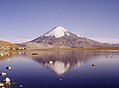 Parinacota
 -
 Sinclair Wetlands
 -
 Groundwater flow
 -
 Schematic illustration of a proposed approach for capturing moisture above the ocean surface and transporting it to proximal land for improving water security
 -
 Total Renewable Freshwater Resources in mm per year By WaterGAP Average 1961-1990
 -
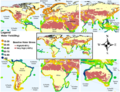 Spatial variability of water yield along the delineated near-offshore region of 200 km across the world
 -
 Drinking water
 -
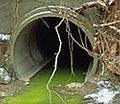 Water pollution
 -
 Global Values of Water Resources and Water Use
 -
 A RES 71 313 E
 -
 Urban Water Cycle - EPA 2004


