Lemonade fruit: Difference between revisions
CSV import |
No edit summary |
||
| (2 intermediate revisions by the same user not shown) | |||
| Line 31: | Line 31: | ||
[[Category:Australian cuisine]] | [[Category:Australian cuisine]] | ||
{{food-stub}} | {{food-stub}} | ||
<gallery> | |||
File:Lemonade_fruit.jpg|Lemonade fruit | |||
</gallery> | |||
Latest revision as of 00:34, 17 March 2025
Lemonade fruit is a hybrid citrus fruit that is a cross between a lemon and a navel orange or a pomelo. It is known for its sweet and tangy flavor, similar to that of lemonade, hence the name.
History[edit]
The lemonade fruit was first cultivated in Australia in the late 20th century. It is believed to have originated from a natural cross-pollination between a lemon and a navel orange or pomelo.
Description[edit]
The lemonade fruit is similar in size to a lemon but has a sweeter taste. The skin is thin and smooth, with a bright yellow color. The flesh is juicy and less acidic than a lemon, making it more palatable to eat raw.
Cultivation[edit]
Lemonade fruit trees are evergreen and can grow up to 20 feet tall. They prefer a sunny location and well-drained soil. The trees are self-fertile, meaning they do not require another tree for pollination. The fruit is typically harvested in the winter months.
Uses[edit]
Lemonade fruit can be used in a variety of culinary applications. It can be eaten raw, used in salads, or used to make juice, jams, and desserts. It is also used in cocktails and other beverages due to its sweet and tangy flavor.
Health Benefits[edit]
Like other citrus fruits, lemonade fruit is high in vitamin C and other antioxidants. It also contains dietary fiber and is low in calories, making it a healthy choice for a snack or addition to meals.
See Also[edit]

-
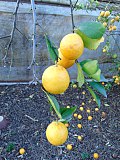 Lemonade fruit

