Viticulture: Difference between revisions
CSV import |
CSV import |
||
| (2 intermediate revisions by the same user not shown) | |||
| Line 1: | Line 1: | ||
'''Viticulture''' | {{Short description|The science, production, and study of grapes}} | ||
{{Use dmy dates|date=October 2023}} | |||
'''Viticulture''' is the science, production, and study of grapes. It focuses primarily on the process of growing grapevines for [[winemaking]], but also includes the cultivation of grapes for [[table grapes]], [[raisins]], and other products. Viticulture is a branch of the larger field of [[horticulture]]. | |||
==History== | ==History== | ||
[[ | The history of viticulture dates back to ancient times, with evidence of grape cultivation and wine production found in archaeological sites across the [[Middle East]], [[Mediterranean]], and [[Europe]]. The [[ancient Egyptians]] and [[Romans]] were among the first to develop systematic viticulture practices. | ||
==Viticultural Practices== | |||
Viticulture involves a variety of practices that are essential for the successful cultivation of grapevines. These include: | |||
===Site Selection=== | |||
The selection of a suitable site is crucial for viticulture. Factors such as [[climate]], [[soil type]], and [[topography]] play a significant role in determining the quality and characteristics of the grapes produced. | |||
===Planting=== | |||
The choice of [[grape variety]] and [[rootstock]] is important for adapting to local conditions and achieving desired wine characteristics. Planting density and row orientation are also considered to optimize sunlight exposure and air circulation. | |||
===Canopy Management=== | |||
[[Canopy management]] involves the training and pruning of grapevines to control the growth of leaves and shoots. This practice helps in maximizing sunlight exposure, improving air circulation, and reducing the risk of [[disease]]. | |||
== | ===Irrigation=== | ||
Irrigation is used to supplement natural rainfall and ensure that grapevines receive adequate water. The amount and timing of irrigation can significantly affect grape quality and yield. | |||
== | ===Pest and Disease Control=== | ||
Viticulturists employ various strategies to manage [[pests]] and [[diseases]] that can affect grapevines. These include the use of [[pesticides]], [[biological control]], and [[integrated pest management]] techniques. | |||
== | ===Harvesting=== | ||
The timing of the [[harvest]] is critical in viticulture. Grapes are typically harvested when they reach optimal ripeness, which is determined by factors such as sugar content, acidity, and flavor. | |||
== | ==Viticulture and Winemaking== | ||
While viticulture focuses on the cultivation of grapes, [[winemaking]] is the process of converting grapes into wine. The quality of the wine is heavily influenced by the viticultural practices employed, as the characteristics of the grapes determine the potential of the wine. | |||
== | ==Modern Viticulture== | ||
Modern viticulture incorporates advanced technologies and scientific research to improve grape quality and vineyard management. Techniques such as [[precision viticulture]], which uses [[GPS]] and [[remote sensing]] to monitor vineyard conditions, are becoming increasingly common. | |||
== | ==Related pages== | ||
* [[Winemaking]] | |||
* [[Oenology]] | |||
* [[Vineyard]] | |||
* [[Grape]] | |||
* [[Wine]] | |||
[[Category:Agriculture]] | |||
[[Category:Horticulture]] | |||
[[Category:Viticulture]] | [[Category:Viticulture]] | ||
<gallery> | |||
File:Wine grapes03.jpg|Viticulture | |||
File:Brhlovce IMG 2315.JPG|Viticulture | |||
File:NorCal2018 -005 Wine Country - Random Napa Valley Vineyard on the side of a road -S0292033.jpg|Viticulture | |||
File:Downy and Powdery mildew on grape leaf.JPG|Viticulture | |||
File:Grape gathering.jpg|Viticulture | |||
File:Harvesting the Grapes in Duras.jpg|Viticulture | |||
</gallery> | |||
Latest revision as of 01:07, 20 February 2025
The science, production, and study of grapes
Viticulture is the science, production, and study of grapes. It focuses primarily on the process of growing grapevines for winemaking, but also includes the cultivation of grapes for table grapes, raisins, and other products. Viticulture is a branch of the larger field of horticulture.
History[edit]
The history of viticulture dates back to ancient times, with evidence of grape cultivation and wine production found in archaeological sites across the Middle East, Mediterranean, and Europe. The ancient Egyptians and Romans were among the first to develop systematic viticulture practices.
Viticultural Practices[edit]
Viticulture involves a variety of practices that are essential for the successful cultivation of grapevines. These include:
Site Selection[edit]
The selection of a suitable site is crucial for viticulture. Factors such as climate, soil type, and topography play a significant role in determining the quality and characteristics of the grapes produced.
Planting[edit]
The choice of grape variety and rootstock is important for adapting to local conditions and achieving desired wine characteristics. Planting density and row orientation are also considered to optimize sunlight exposure and air circulation.
Canopy Management[edit]
Canopy management involves the training and pruning of grapevines to control the growth of leaves and shoots. This practice helps in maximizing sunlight exposure, improving air circulation, and reducing the risk of disease.
Irrigation[edit]
Irrigation is used to supplement natural rainfall and ensure that grapevines receive adequate water. The amount and timing of irrigation can significantly affect grape quality and yield.
Pest and Disease Control[edit]
Viticulturists employ various strategies to manage pests and diseases that can affect grapevines. These include the use of pesticides, biological control, and integrated pest management techniques.
Harvesting[edit]
The timing of the harvest is critical in viticulture. Grapes are typically harvested when they reach optimal ripeness, which is determined by factors such as sugar content, acidity, and flavor.
Viticulture and Winemaking[edit]
While viticulture focuses on the cultivation of grapes, winemaking is the process of converting grapes into wine. The quality of the wine is heavily influenced by the viticultural practices employed, as the characteristics of the grapes determine the potential of the wine.
Modern Viticulture[edit]
Modern viticulture incorporates advanced technologies and scientific research to improve grape quality and vineyard management. Techniques such as precision viticulture, which uses GPS and remote sensing to monitor vineyard conditions, are becoming increasingly common.
Related pages[edit]
-
 Viticulture
 -
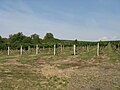 Viticulture
 -
 Viticulture
 -
 Viticulture
 -
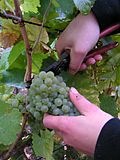 Viticulture
 -
 Viticulture


