Yemenite citron
Yemenite citron is a distinct variety of citron, a large fragrant citrus fruit with a thick rind. The Yemenite citron is native to Yemen, and is traditionally used in Jewish rituals during the holiday of Sukkot.
History[edit]
The Yemenite citron has been cultivated in Yemen for centuries, and is believed to have been brought to the region by Jewish traders. The fruit is highly prized for its unique aroma and flavor, and is often used in traditional Yemenite cooking.
Cultivation[edit]
The Yemenite citron is a hardy tree that can withstand harsh desert conditions. It requires a sunny location and well-drained soil. The tree produces fruit in the fall, which is harvested and used in various culinary and religious applications.
Religious Significance[edit]
In Jewish tradition, the Yemenite citron is one of the four species used during the holiday of Sukkot. The fruit is held together with a palm branch, willow branches, and myrtle branches, and is waved in a special ceremony known as the Lulav and Etrog.
Culinary Uses[edit]
In addition to its religious uses, the Yemenite citron is also used in cooking. The fruit's rind is often candied or used to flavor dishes, while the juice can be used in place of lemon juice in recipes.
See Also[edit]

-
 The holiday of Sukkot in Jerusalem
 -
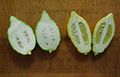 Two citrons
 -
 Yemenite citron


Medical Disclaimer: WikiMD is for informational purposes only and is not a substitute for professional medical advice. Content may be inaccurate or outdated and should not be used for diagnosis or treatment. Always consult your healthcare provider for medical decisions. Verify information with trusted sources such as CDC.gov and NIH.gov. By using this site, you agree that WikiMD is not liable for any outcomes related to its content. See full disclaimer.
Credits:Most images are courtesy of Wikimedia commons, and templates, categories Wikipedia, licensed under CC BY SA or similar.
Translate page: - East Asian
中文,
日本,
한국어,
South Asian
हिन्दी,
தமிழ்,
తెలుగు,
Urdu,
ಕನ್ನಡ,
Southeast Asian
Indonesian,
Vietnamese,
Thai,
မြန်မာဘာသာ,
বাংলা
European
español,
Deutsch,
français,
Greek,
português do Brasil,
polski,
română,
русский,
Nederlands,
norsk,
svenska,
suomi,
Italian
Middle Eastern & African
عربى,
Turkish,
Persian,
Hebrew,
Afrikaans,
isiZulu,
Kiswahili,
Other
Bulgarian,
Hungarian,
Czech,
Swedish,
മലയാളം,
मराठी,
ਪੰਜਾਬੀ,
ગુજરાતી,
Portuguese,
Ukrainian

