Vanilla planifolia
Species of orchid
Vanilla planifolia, commonly known as vanilla, is a species of orchid native to Mexico and Central America. It is the primary source of the vanilla flavoring, derived from the vanilla bean.
Description[edit]
Vanilla planifolia is a perennial climbing vine that can grow up to 15 meters in length. The plant has fleshy, succulent leaves and greenish-yellow flowers. The flowers are hermaphroditic and require manual pollination in cultivation outside of their native range. The fruit, known as a vanilla bean, is a long, slender pod that contains tiny seeds.
Cultivation[edit]
The cultivation of Vanilla planifolia requires a warm, humid climate with temperatures ranging from 21 to 32 degrees Celsius. The plant is typically grown in shaded areas to mimic its natural habitat under the forest canopy. Vanilla vines are often supported by trees or trellises.
Pollination[edit]
In its native habitat, Vanilla planifolia is pollinated by specific species of bees. However, outside of this region, pollination is usually done by hand. This labor-intensive process involves transferring pollen from the anther to the stigma of the flower.
Harvesting and Processing[edit]
Vanilla beans are harvested when they are still green and immature. The beans undergo a curing process that includes blanching, sweating, and drying. This process can take several months and is essential for developing the characteristic vanilla flavor and aroma.
Uses[edit]
Vanilla is widely used as a flavoring agent in food and beverages, particularly in desserts such as ice cream, cakes, and custards. It is also used in perfumes and aromatherapy.
Related pages[edit]
Gallery[edit]
-
 Cluster of green vanilla pods
 -
 Vanilla vine growing on a Dracaena


References[edit]
- Chase, M. W., & Cameron, K. M. (2000). "Vanilla: The genus Vanilla." In: "Orchids of the World." Timber Press.
- Lubinsky, P., et al. (2008). "Origins and dispersal of cultivated vanilla (Vanilla planifolia Jacks. ex Andrews)." Economic Botany, 62(2), 127-138.
Vanilla_planifolia[edit]
-
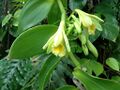 Vanilla planifolia plant
.jpg)
Advertise on WikiMD — 81,000+ full articles, ~900,000 total pages, ~250 million page views. Global reach, limited time promotional rates from $1/page/day. Learn more · View stats

Medical Disclaimer: WikiMD is for informational purposes only and is not a substitute for professional medical advice. Content may be inaccurate or outdated and should not be used for diagnosis or treatment. Always consult your healthcare provider for medical decisions. Verify information with trusted sources such as CDC.gov and NIH.gov. By using this site, you agree that WikiMD is not liable for any outcomes related to its content. See full disclaimer.
Credits:Most images are courtesy of Wikimedia commons, and templates, categories Wikipedia, licensed under CC BY SA or similar.
Translate page: - East Asian
中文,
日本,
한국어,
South Asian
हिन्दी,
தமிழ்,
తెలుగు,
Urdu,
ಕನ್ನಡ,
Southeast Asian
Indonesian,
Vietnamese,
Thai,
မြန်မာဘာသာ,
বাংলা
European
español,
Deutsch,
français,
Greek,
português do Brasil,
polski,
română,
русский,
Nederlands,
norsk,
svenska,
suomi,
Italian
Middle Eastern & African
عربى,
Turkish,
Persian,
Hebrew,
Afrikaans,
isiZulu,
Kiswahili,
Other
Bulgarian,
Hungarian,
Czech,
Swedish,
മലയാളം,
मराठी,
ਪੰਜਾਬੀ,
ગુજરાતી,
Portuguese,
Ukrainian

