Tyrannosaurus
Genus of large theropod dinosaur
Tyrannosaurus is a genus of coelurosaurian theropod dinosaur that lived during the late Cretaceous period, approximately 68 to 66 million years ago. The species Tyrannosaurus rex (rex meaning "king" in Latin), often colloquially referred to as T. rex, is one of the most well-represented of the large theropods. Tyrannosaurus was among the last non-avian dinosaurs to exist before the Cretaceous–Paleogene extinction event.
Description[edit]

Tyrannosaurus was a bipedal carnivore with a massive skull balanced by a long, heavy tail. Relative to its large and powerful hind limbs, Tyrannosaurus forelimbs were short but unusually powerful for their size and had two clawed digits. The most complete specimen measures up to 12.3 meters (40 feet) in length, and it is estimated to have weighed between 8.4 and 14 metric tons.
Discovery and History[edit]

The first partial skeleton of Tyrannosaurus was discovered in 1902 by the famous fossil hunter Barnum Brown in the Hell Creek Formation of Montana. The genus was formally described by Henry Fairfield Osborn in 1905. Initially, several other genera, such as Manospondylus and Dynamosaurus, were thought to be distinct, but later research confirmed they were synonymous with Tyrannosaurus.
Paleobiology[edit]
Tyrannosaurus was a top predator in its ecosystem, preying on large herbivorous dinosaurs such as hadrosaurs and ceratopsians. Its powerful jaws and serrated teeth were capable of crushing bone, and it likely had a keen sense of smell, aiding in its role as a scavenger as well.
Specimens[edit]

Numerous specimens of Tyrannosaurus have been discovered, with notable examples including Sue, housed at the Field Museum of Natural History in Chicago, and Scotty, one of the largest known specimens. These specimens have provided significant insights into the biology and life history of Tyrannosaurus.
Growth and Development[edit]
Studies of Tyrannosaurus growth patterns suggest that it experienced a rapid growth spurt during adolescence, reaching full size in about 20 years. This rapid growth was followed by a plateau in size, with individuals living up to 30 years.
Related Pages[edit]

Gallery[edit]
-
 Diagram showing various Tyrannosaurus specimens
 -
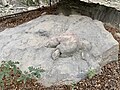 Reconstructed Tyrannosaurus at Philmont
 -
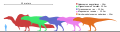 Comparison of Tyrannosaurus with other large theropods
 -
 Skull of Tyrannosaurus rex


Ad. Transform your life with W8MD's
GLP-1 weight loss injections special from $29.99


W8MD Medical Weight Loss, Sleep and Medspa offers physician-supervised medical weight loss programs: NYC medical weight loss Philadelphia medical weight loss
Affordable GLP-1 Weight Loss ShotsAffordable GLP-1 Weight Loss Shots
Budget GLP-1 injections NYC (insurance & self-pay options) Popular treatments:
- Semaglutide starting from $29.99/week
- Tirzepatide starting from $45.00/week
✔ Most insurances accepted for visits ✔ Prior authorization support when eligible
Start your physician weight loss NYC journey today:
📍 NYC: Brooklyn weight loss center 📍 Philadelphia: Philadelphia weight loss center
📞 Call: 718-946-5500 (NYC) | 215-676-2334 (Philadelphia)
Tags: Affordable GLP1 weight loss NYC, Wegovy NYC, Zepbound NYC, Philadelphia medical weight loss


|
WikiMD Medical Encyclopedia |
Medical Disclaimer: WikiMD is not a substitute for professional medical advice. The information on WikiMD is provided as an information resource only, may be incorrect, outdated or misleading, and is not to be used or relied on for any diagnostic or treatment purposes. Please consult your health care provider before making any healthcare decisions or for guidance about a specific medical condition. WikiMD expressly disclaims responsibility, and shall have no liability, for any damages, loss, injury, or liability whatsoever suffered as a result of your reliance on the information contained in this site. By visiting this site you agree to the foregoing terms and conditions, which may from time to time be changed or supplemented by WikiMD. If you do not agree to the foregoing terms and conditions, you should not enter or use this site. See full disclaimer.
Credits:Most images are courtesy of Wikimedia commons, and templates, categories Wikipedia, licensed under CC BY SA or similar.
Translate this page: - East Asian
中文,
日本,
한국어,
South Asian
हिन्दी,
தமிழ்,
తెలుగు,
Urdu,
ಕನ್ನಡ,
Southeast Asian
Indonesian,
Vietnamese,
Thai,
မြန်မာဘာသာ,
বাংলা
European
español,
Deutsch,
français,
Greek,
português do Brasil,
polski,
română,
русский,
Nederlands,
norsk,
svenska,
suomi,
Italian
Middle Eastern & African
عربى,
Turkish,
Persian,
Hebrew,
Afrikaans,
isiZulu,
Kiswahili,
Other
Bulgarian,
Hungarian,
Czech,
Swedish,
മലയാളം,
मराठी,
ਪੰਜਾਬੀ,
ગુજરાતી,
Portuguese,
Ukrainian
