Tourtière

Tourtière is a traditional Canadian meat pie dish originating from Quebec. It is typically made with minced pork, veal, or beef, and is a staple during the Christmas and New Year's celebrations in Quebec. The dish is named after the French word "tourte," which refers to the passenger pigeon, a bird that was once commonly used in the pie.
History[edit]
The origins of tourtière date back to the early French settlers in Quebec. The dish was originally made with wild game, including passenger pigeons, which were abundant at the time. Over the years, the recipe evolved to include domesticated meats such as pork and beef.
Ingredients[edit]
The primary ingredients of a traditional tourtière include:
- Minced pork, veal, or beef
- Onion
- Garlic
- Potato
- Spices such as cinnamon, cloves, and nutmeg
- Pie crust
Preparation[edit]
The preparation of tourtière involves creating a savory filling by cooking the minced meat with onions, garlic, and spices. The mixture is then combined with mashed potatoes to create a thick, hearty filling. This filling is placed into a pie crust and covered with another layer of crust. The pie is then baked until the crust is golden brown.
Regional Variations[edit]
While the traditional Quebecois tourtière is the most well-known, there are several regional variations of the dish:
- In the Saguenay–Lac-Saint-Jean region, the tourtière is made with cubed meat rather than minced meat and often includes game such as moose or rabbit.
- In the Acadian regions of New Brunswick and Nova Scotia, the dish is known as "pâté à la viande" and is typically made with pork and beef.
Cultural Significance[edit]
Tourtière holds a special place in Quebecois culture, particularly during the holiday season. It is often served as part of the traditional Réveillon meal on Christmas Eve and New Year's Eve. The dish is also a symbol of Quebec's culinary heritage and is enjoyed by many Canadians across the country.
See Also[edit]
References[edit]
External Links[edit]

.svg) | This Canada-related article is a stub. You can help WikiMD by expanding the page. |
-
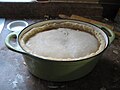 Tourtière


Medical Disclaimer: WikiMD is for informational purposes only and is not a substitute for professional medical advice. Content may be inaccurate or outdated and should not be used for diagnosis or treatment. Always consult your healthcare provider for medical decisions. Verify information with trusted sources such as CDC.gov and NIH.gov. By using this site, you agree that WikiMD is not liable for any outcomes related to its content. See full disclaimer.
Credits:Most images are courtesy of Wikimedia commons, and templates, categories Wikipedia, licensed under CC BY SA or similar.
Translate page: - East Asian
中文,
日本,
한국어,
South Asian
हिन्दी,
தமிழ்,
తెలుగు,
Urdu,
ಕನ್ನಡ,
Southeast Asian
Indonesian,
Vietnamese,
Thai,
မြန်မာဘာသာ,
বাংলা
European
español,
Deutsch,
français,
Greek,
português do Brasil,
polski,
română,
русский,
Nederlands,
norsk,
svenska,
suomi,
Italian
Middle Eastern & African
عربى,
Turkish,
Persian,
Hebrew,
Afrikaans,
isiZulu,
Kiswahili,
Other
Bulgarian,
Hungarian,
Czech,
Swedish,
മലയാളം,
मराठी,
ਪੰਜਾਬੀ,
ગુજરાતી,
Portuguese,
Ukrainian

