Tiramisu

Tiramisu is a popular Italian dessert that is made with ladyfingers dipped in coffee and layered with a mixture of mascarpone cheese, eggs, and sugar. The dessert is typically finished with a dusting of cocoa powder on top.
History[edit]
- The origin of tiramisu is somewhat unclear, with several regions in Italy claiming to be the birthplace of the dessert. One popular story is that tiramisu was created in the 1960s in the Veneto region of Italy, by a pastry chef named Roberto Linguanotto.
- According to this story, Linguanotto created the dessert as a variation on an existing dish called "zuppa inglese," which was made with ladyfingers soaked in Alchermes, a type of liqueur.
- Tiramisu became popular in Italy in the 1980s, and quickly spread to other parts of the world, becoming a popular dessert in many Italian restaurants.
Description[edit]
- Tiramisu is made by layering ladyfingers that have been dipped in coffee or espresso with a mixture of mascarpone cheese, eggs, and sugar. The dessert is typically finished with a dusting of cocoa powder on top.
- The mascarpone mixture is typically made by beating egg yolks and sugar together until they are pale and fluffy, then folding in mascarpone cheese that has been softened to room temperature.
- The ladyfingers used in tiramisu are a type of sponge cake that is shaped like a finger, and are typically dipped in coffee or espresso to soften them before being layered with the mascarpone mixture.
- Tiramisu is typically served chilled, and is often garnished with whipped cream, fresh fruit, or additional cocoa powder.
Variations[edit]
- There are many variations of tiramisu, with some recipes incorporating ingredients such as liqueurs, fruit, or chocolate. Some variations use different types of cookies or cakes in place of the traditional ladyfingers.
See also[edit]
-
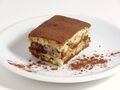 Tiramisu by Raffaele Diomede
 -
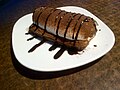 Tiramisu in Naples
 -
 Tiramisu birthday cake


Medical Disclaimer: WikiMD is for informational purposes only and is not a substitute for professional medical advice. Content may be inaccurate or outdated and should not be used for diagnosis or treatment. Always consult your healthcare provider for medical decisions. Verify information with trusted sources such as CDC.gov and NIH.gov. By using this site, you agree that WikiMD is not liable for any outcomes related to its content. See full disclaimer.
Credits:Most images are courtesy of Wikimedia commons, and templates, categories Wikipedia, licensed under CC BY SA or similar.
Translate page: - East Asian
中文,
日本,
한국어,
South Asian
हिन्दी,
தமிழ்,
తెలుగు,
Urdu,
ಕನ್ನಡ,
Southeast Asian
Indonesian,
Vietnamese,
Thai,
မြန်မာဘာသာ,
বাংলা
European
español,
Deutsch,
français,
Greek,
português do Brasil,
polski,
română,
русский,
Nederlands,
norsk,
svenska,
suomi,
Italian
Middle Eastern & African
عربى,
Turkish,
Persian,
Hebrew,
Afrikaans,
isiZulu,
Kiswahili,
Other
Bulgarian,
Hungarian,
Czech,
Swedish,
മലയാളം,
मराठी,
ਪੰਜਾਬੀ,
ગુજરાતી,
Portuguese,
Ukrainian

