Thujaplicin
Thujaplicin is a naturally occurring organic compound classified as a tropolone derivative. It is found in the heartwood of trees in the Cupressaceae family, including the Western Red Cedar (Thuja plicata), from which it derives its name. Thujaplicin is known for its antimicrobial properties and is used in various applications, including cosmetics and pharmaceuticals.
Chemical Structure and Properties[edit]
Thujaplicin is a monoterpenoid with a seven-membered ring structure, which is unusual among natural products. The compound has a molecular formula of C10H12O2 and a molecular weight of 164.20 g/mol. It is a yellow crystalline solid at room temperature and is soluble in organic solvents such as ethanol and chloroform.
Natural Occurrence[edit]
Thujaplicin is found in the heartwood of several species of trees in the Cupressaceae family, including the Western Red Cedar (Thuja plicata), the Japanese Cedar (Cryptomeria japonica), and the Hinoki Cypress (Chamaecyparis obtusa). The compound is believed to contribute to the natural resistance of these trees to decay and insect attack.
Uses[edit]
Thujaplicin has a broad spectrum of antimicrobial activity, making it useful in a variety of applications. It is used as a preservative in cosmetics and personal care products due to its ability to inhibit the growth of bacteria and fungi. In the pharmaceutical industry, thujaplicin is used in the formulation of topical antiseptic creams and ointments. It is also used in the treatment of skin conditions such as psoriasis and eczema.
Pharmacology[edit]
Thujaplicin exhibits antimicrobial activity against a wide range of organisms, including bacteria, fungi, and viruses. It is believed to act by chelating metal ions, disrupting the function of essential enzymes in the microbial cell. Thujaplicin also has anti-inflammatory properties, which may contribute to its effectiveness in treating skin conditions.
Safety[edit]
Thujaplicin is generally considered safe for topical use. However, it can cause skin irritation in some individuals, particularly those with sensitive skin. It is recommended to perform a patch test before using products containing thujaplicin.
See Also[edit]

-
 Alpha-thujaplicin tautomers
 -
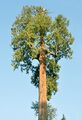 Thuja plicata in Vancouver
 -
 Biosynthesis of beta-thujaplicin from troponeirontricarbonyl complex
 -
 Biosynthesis of beta-thujaplicin through electroreductive alkylation
 -
 Biosynthesis of beta-thujaplicin from 2-isopropylcyclohexanone
 -
 Biosynthesis of β-thujaplicin through oxyallyl cation (4+3) cyclization
 -
 Beta-thujaplicin aromaticity


_cyclization.svg)


Medical Disclaimer: WikiMD is for informational purposes only and is not a substitute for professional medical advice. Content may be inaccurate or outdated and should not be used for diagnosis or treatment. Always consult your healthcare provider for medical decisions. Verify information with trusted sources such as CDC.gov and NIH.gov. By using this site, you agree that WikiMD is not liable for any outcomes related to its content. See full disclaimer.
Credits:Most images are courtesy of Wikimedia commons, and templates, categories Wikipedia, licensed under CC BY SA or similar.
Translate page: - East Asian
中文,
日本,
한국어,
South Asian
हिन्दी,
தமிழ்,
తెలుగు,
Urdu,
ಕನ್ನಡ,
Southeast Asian
Indonesian,
Vietnamese,
Thai,
မြန်မာဘာသာ,
বাংলা
European
español,
Deutsch,
français,
Greek,
português do Brasil,
polski,
română,
русский,
Nederlands,
norsk,
svenska,
suomi,
Italian
Middle Eastern & African
عربى,
Turkish,
Persian,
Hebrew,
Afrikaans,
isiZulu,
Kiswahili,
Other
Bulgarian,
Hungarian,
Czech,
Swedish,
മലയാളം,
मराठी,
ਪੰਜਾਬੀ,
ગુજરાતી,
Portuguese,
Ukrainian

