Theodrenaline
A combination drug used in medical treatments
| Theodrenaline | |
|---|---|
|
|

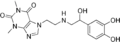
Theodrenaline is a pharmaceutical drug that combines the effects of theophylline and adrenaline (also known as epinephrine). It is used primarily in the treatment of certain cardiovascular and respiratory conditions.
Pharmacology[edit]
Theodrenaline is a sympathomimetic agent, meaning it mimics the effects of the sympathetic nervous system. It combines the bronchodilator effects of theophylline with the vasoconstrictive and cardiac stimulant effects of adrenaline.
Mechanism of Action[edit]
Theophylline works by inhibiting phosphodiesterase, leading to an increase in cyclic AMP levels, which results in bronchodilation. Adrenaline acts on adrenergic receptors, causing vasoconstriction and increased heart rate.
Medical Uses[edit]
Theodrenaline is used in the management of conditions such as asthma, chronic obstructive pulmonary disease (COPD), and certain types of cardiac arrest. It is particularly useful in situations where both bronchodilation and cardiovascular support are needed.
Side Effects[edit]
Common side effects of theodrenaline include tachycardia, hypertension, nervousness, and tremors. Due to its adrenaline component, it can also cause arrhythmias and angina in susceptible individuals.
Administration[edit]
Theodrenaline is typically administered via intravenous injection in a clinical setting. Dosage and administration depend on the specific condition being treated and the patient's response to the drug.
Related pages[edit]
-
 Theodrenaline

Medical Disclaimer: WikiMD is for informational purposes only and is not a substitute for professional medical advice. Content may be inaccurate or outdated and should not be used for diagnosis or treatment. Always consult your healthcare provider for medical decisions. Verify information with trusted sources such as CDC.gov and NIH.gov. By using this site, you agree that WikiMD is not liable for any outcomes related to its content. See full disclaimer.
Credits:Most images are courtesy of Wikimedia commons, and templates, categories Wikipedia, licensed under CC BY SA or similar.
Translate page: - East Asian
中文,
日本,
한국어,
South Asian
हिन्दी,
தமிழ்,
తెలుగు,
Urdu,
ಕನ್ನಡ,
Southeast Asian
Indonesian,
Vietnamese,
Thai,
မြန်မာဘာသာ,
বাংলা
European
español,
Deutsch,
français,
Greek,
português do Brasil,
polski,
română,
русский,
Nederlands,
norsk,
svenska,
suomi,
Italian
Middle Eastern & African
عربى,
Turkish,
Persian,
Hebrew,
Afrikaans,
isiZulu,
Kiswahili,
Other
Bulgarian,
Hungarian,
Czech,
Swedish,
മലയാളം,
मराठी,
ਪੰਜਾਬੀ,
ગુજરાતી,
Portuguese,
Ukrainian

