Telomerase RNA component
Telomerase RNA component (TERC), also known as the telomerase RNA template, is a critical component of the telomerase complex, a ribonucleoprotein enzyme essential for the replication of chromosome ends (telomeres). Telomeres protect the end of the chromosome from DNA damage or from fusion with neighboring chromosomes. However, during cell division, telomeres are shortened, which is counteracted by the action of telomerase. TERC serves as the RNA template from which telomeric DNA is synthesized.
Function[edit]
The primary function of TERC is to provide a template for the addition of telomeric DNA repeats to the ends of chromosomes. This process is crucial for maintaining chromosome stability and integrity, which in turn is essential for the prevention of genetic disorders and the aging process. Without the action of telomerase and its RNA component, TERC, cells would lose a significant portion of their telomeres with each division, eventually leading to cell death or senescence.
Structure[edit]
TERC is a small RNA molecule that is part of the larger telomerase complex. Its structure includes a short template region that is complementary to the telomeric DNA repeat sequence. This region is crucial for the synthesis of telomere repeats by the telomerase enzyme. The rest of the TERC molecule is involved in the structural integrity and proper functioning of the telomerase complex.
Clinical Significance[edit]
Alterations in the TERC gene can lead to various medical conditions. Mutations that reduce the expression or functionality of TERC can lead to telomere syndromes such as dyskeratosis congenita, which is characterized by premature aging, bone marrow failure, and an increased risk of cancer. Conversely, upregulation of TERC is observed in many cancer cells, contributing to their immortality by enabling endless cell division.
Genetics[edit]
The TERC gene is located on chromosome 3 (3q26.2) in humans. It is highly conserved across many species, highlighting its essential role in cellular biology. Genetic studies have identified mutations in the TERC gene associated with both inherited and acquired telomere syndromes.
Research Directions[edit]
Research on TERC and the telomerase complex continues to be a significant area of interest, particularly in the fields of aging and cancer. Understanding the regulation of TERC and telomerase activity offers potential therapeutic targets for age-related diseases and cancer. For example, inhibiting telomerase activity in cancer cells could limit their growth, while enhancing telomerase activity in aging cells could potentially delay aging processes and extend lifespan.
See Also[edit]
 | This medical article is a stub. You can help WikiMD by expanding the page. |
-
 Telomerase RNA component
 -
 Telomerase RNA component
 -
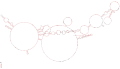 Telomerase RNA component
 -
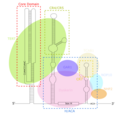 Illustration of hTR and associated proteins of the telomerase complex


Medical Disclaimer: WikiMD is for informational purposes only and is not a substitute for professional medical advice. Content may be inaccurate or outdated and should not be used for diagnosis or treatment. Always consult your healthcare provider for medical decisions. Verify information with trusted sources such as CDC.gov and NIH.gov. By using this site, you agree that WikiMD is not liable for any outcomes related to its content. See full disclaimer.
Credits:Most images are courtesy of Wikimedia commons, and templates, categories Wikipedia, licensed under CC BY SA or similar.
Translate page: - East Asian
中文,
日本,
한국어,
South Asian
हिन्दी,
தமிழ்,
తెలుగు,
Urdu,
ಕನ್ನಡ,
Southeast Asian
Indonesian,
Vietnamese,
Thai,
မြန်မာဘာသာ,
বাংলা
European
español,
Deutsch,
français,
Greek,
português do Brasil,
polski,
română,
русский,
Nederlands,
norsk,
svenska,
suomi,
Italian
Middle Eastern & African
عربى,
Turkish,
Persian,
Hebrew,
Afrikaans,
isiZulu,
Kiswahili,
Other
Bulgarian,
Hungarian,
Czech,
Swedish,
മലയാളം,
मराठी,
ਪੰਜਾਬੀ,
ગુજરાતી,
Portuguese,
Ukrainian

