Tatar cuisine
Tatar cuisine is the traditional culinary style of the Tatar people, a Turkic ethnic group primarily residing in Tatarstan, Russia, and other parts of Eastern Europe and Central Asia. Tatar cuisine reflects the nomadic and agricultural lifestyle of the Tatars, with a strong emphasis on meat, grains, and dairy products.
History[edit]
The history of Tatar cuisine is closely tied to the history of the Tatar people. The Tatars were originally a nomadic people, and their diet was heavily influenced by the foods available in the regions they traveled through. Over time, as the Tatars settled in various regions, their cuisine evolved to incorporate local ingredients and cooking techniques.
Ingredients[edit]
The main ingredients in Tatar cuisine are meat, grains, and dairy products. Lamb, beef, and chicken are the most commonly used meats, while wheat, rye, and barley are the primary grains. Dairy products such as milk, cheese, and yogurt are also staples of the Tatar diet.
Dishes[edit]
One of the most famous Tatar dishes is beshbarmak, a dish made of boiled meat and noodles, traditionally eaten with the hands. Other popular dishes include pilaf, a rice dish cooked in a seasoned broth, and chak-chak, a sweet dessert made from honey and dough.
Beverages[edit]
Traditional Tatar beverages include ayran, a yogurt-based drink, and tea, which is often served with meals.
Influence[edit]
Tatar cuisine has had a significant influence on the cuisines of other cultures in the region, including Russian and Central Asian cuisines. Many Tatar dishes, such as beshbarmak and pilaf, have been adopted by these cultures and are now considered traditional dishes in their own right.
See also[edit]

-
 Shulpa, a traditional Tatar soup
 -
 Plov, a popular Tatar rice dish
 -
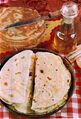 Qistibi, a Tatar flatbread with filling
 -
 Chak-chak, a Tatar sweet dessert
 -
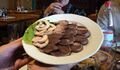 Horsemeat platter, a Tatar delicacy


Medical Disclaimer: WikiMD is for informational purposes only and is not a substitute for professional medical advice. Content may be inaccurate or outdated and should not be used for diagnosis or treatment. Always consult your healthcare provider for medical decisions. Verify information with trusted sources such as CDC.gov and NIH.gov. By using this site, you agree that WikiMD is not liable for any outcomes related to its content. See full disclaimer.
Credits:Most images are courtesy of Wikimedia commons, and templates, categories Wikipedia, licensed under CC BY SA or similar.
Translate page: - East Asian
中文,
日本,
한국어,
South Asian
हिन्दी,
தமிழ்,
తెలుగు,
Urdu,
ಕನ್ನಡ,
Southeast Asian
Indonesian,
Vietnamese,
Thai,
မြန်မာဘာသာ,
বাংলা
European
español,
Deutsch,
français,
Greek,
português do Brasil,
polski,
română,
русский,
Nederlands,
norsk,
svenska,
suomi,
Italian
Middle Eastern & African
عربى,
Turkish,
Persian,
Hebrew,
Afrikaans,
isiZulu,
Kiswahili,
Other
Bulgarian,
Hungarian,
Czech,
Swedish,
മലയാളം,
मराठी,
ਪੰਜਾਬੀ,
ગુજરાતી,
Portuguese,
Ukrainian

