Syrup of ipecac
Syrup of Ipecac is a medicine derived from the roots of the Ipecacuanha plant. It is primarily used as an emetic, a substance that induces vomiting, in cases of accidental ingestion of certain poisons.
History[edit]
The use of Syrup of Ipecac dates back to the 17th century when it was first discovered by European explorers in the Amazon Rainforest. The indigenous tribes of the region had been using the plant for its medicinal properties for centuries. The plant was named Ipecacuanha, which in the Tupi language means "roadside sick-making plant".
Medical Use[edit]
Syrup of Ipecac is used in emergency situations to induce vomiting in cases of accidental ingestion of certain poisons. It works by irritating the stomach lining and stimulating the brain's vomiting center. However, it is not effective for all types of poisons and should only be used under the guidance of a healthcare professional or poison control center.
Side Effects[edit]
While Syrup of Ipecac can be life-saving in certain situations, it also has potential side effects. These can include stomach pain, diarrhea, dizziness, and in rare cases, cardiac complications. It is also possible to develop an allergy to Ipecac.
Availability and Regulation[edit]
In the United States, Syrup of Ipecac is available over-the-counter in pharmacies. However, its use has declined in recent years due to concerns about its effectiveness and potential for misuse. The American Academy of Pediatrics no longer recommends its use in the home.
See Also[edit]
 | This medical article is a stub. You can help WikiMD by expanding the page. |
-
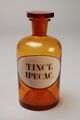 Brown bottle labeled "TINCT. IPECAC."
 -
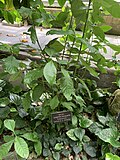 Syrup of ipecac


Medical Disclaimer: WikiMD is for informational purposes only and is not a substitute for professional medical advice. Content may be inaccurate or outdated and should not be used for diagnosis or treatment. Always consult your healthcare provider for medical decisions. Verify information with trusted sources such as CDC.gov and NIH.gov. By using this site, you agree that WikiMD is not liable for any outcomes related to its content. See full disclaimer.
Credits:Most images are courtesy of Wikimedia commons, and templates, categories Wikipedia, licensed under CC BY SA or similar.
Translate page: - East Asian
中文,
日本,
한국어,
South Asian
हिन्दी,
தமிழ்,
తెలుగు,
Urdu,
ಕನ್ನಡ,
Southeast Asian
Indonesian,
Vietnamese,
Thai,
မြန်မာဘာသာ,
বাংলা
European
español,
Deutsch,
français,
Greek,
português do Brasil,
polski,
română,
русский,
Nederlands,
norsk,
svenska,
suomi,
Italian
Middle Eastern & African
عربى,
Turkish,
Persian,
Hebrew,
Afrikaans,
isiZulu,
Kiswahili,
Other
Bulgarian,
Hungarian,
Czech,
Swedish,
മലയാളം,
मराठी,
ਪੰਜਾਬੀ,
ગુજરાતી,
Portuguese,
Ukrainian

