Synaptic vesicle
Synaptic vesicle
A synaptic vesicle is a small organelle found in neurons that stores various neurotransmitters. These vesicles are essential components of the synapse, the junction between two neurons, where they play a crucial role in the propagation of nerve impulses.
Structure[edit]
Synaptic vesicles are spherical structures with a diameter of about 40 nanometers. They are surrounded by a lipid bilayer and filled with neurotransmitters. The vesicle membrane contains various proteins that are involved in vesicle function, including SNARE proteins, which are essential for the fusion of the vesicle with the presynaptic membrane.
Function[edit]
The primary function of synaptic vesicles is to store and release neurotransmitters. When a nerve impulse reaches the synapse, it triggers the fusion of the vesicle with the presynaptic membrane, releasing the neurotransmitters into the synaptic cleft. The neurotransmitters then bind to receptors on the postsynaptic neuron, triggering a response in this neuron.
Recycling[edit]
After the release of neurotransmitters, the vesicle membrane is retrieved from the presynaptic membrane in a process called endocytosis. The vesicle is then refilled with neurotransmitters and prepared for another round of release. This recycling process is essential for the continuous function of the synapse.
Role in disease[edit]
Alterations in synaptic vesicle function can lead to various neurological disorders. For example, defects in vesicle recycling can lead to neurodegeneration, as seen in Alzheimer's disease and Parkinson's disease. Furthermore, some toxins and drugs can interfere with vesicle function, leading to neurotoxicity or altered neural communication.
See also[edit]
 | This neuroscience article is a stub. You can help WikiMD by expanding the page. |
Synaptic_vesicle[edit]
-
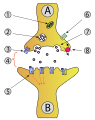 Diagram of a synapse
 -
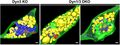 Dynamin-independent pathway of synaptic vesicle recycling
 -
Hippocampal neurons


Medical Disclaimer: WikiMD is for informational purposes only and is not a substitute for professional medical advice. Content may be inaccurate or outdated and should not be used for diagnosis or treatment. Always consult your healthcare provider for medical decisions. Verify information with trusted sources such as CDC.gov and NIH.gov. By using this site, you agree that WikiMD is not liable for any outcomes related to its content. See full disclaimer.
Credits:Most images are courtesy of Wikimedia commons, and templates, categories Wikipedia, licensed under CC BY SA or similar.
Translate page: - East Asian
中文,
日本,
한국어,
South Asian
हिन्दी,
தமிழ்,
తెలుగు,
Urdu,
ಕನ್ನಡ,
Southeast Asian
Indonesian,
Vietnamese,
Thai,
မြန်မာဘာသာ,
বাংলা
European
español,
Deutsch,
français,
Greek,
português do Brasil,
polski,
română,
русский,
Nederlands,
norsk,
svenska,
suomi,
Italian
Middle Eastern & African
عربى,
Turkish,
Persian,
Hebrew,
Afrikaans,
isiZulu,
Kiswahili,
Other
Bulgarian,
Hungarian,
Czech,
Swedish,
മലയാളം,
मराठी,
ਪੰਜਾਬੀ,
ગુજરાતી,
Portuguese,
Ukrainian


