Stretcher
Stretcher is a medical device used for the transportation of patients who require medical care. It is typically a lightweight and portable piece of equipment that can be easily moved and adjusted to accommodate the patient's needs.
History[edit]
The use of stretchers dates back to ancient times, with evidence of their use found in Egyptian tombs. They were often used in military contexts, to transport wounded soldiers from the battlefield. In the modern era, stretchers are used in a variety of medical settings, including hospitals, ambulances, and emergency response situations.
Types of Stretchers[edit]
There are several different types of stretchers, each designed for a specific purpose or situation. These include:
- Wheeled Stretcher: This is the most common type of stretcher, and is typically used in hospitals and ambulances. It features a flat, padded surface and wheels for easy transportation.
- Basket Stretcher: Also known as a Stokes basket, this type of stretcher is used in rescue operations, particularly in situations where the patient needs to be lifted or carried over rough terrain.
- Scoop Stretcher: This type of stretcher is designed to scoop up a patient from the ground, making it ideal for use in emergency situations.
- Flexible Stretcher: This is a lightweight and flexible stretcher that can be rolled up for easy storage and transport. It is often used in situations where space is limited, such as in small aircraft or boats.
Use in Medical Care[edit]
The primary function of a stretcher is to transport patients safely and comfortably. They are often used in conjunction with other medical equipment, such as intravenous drips, oxygen masks, and monitoring devices. In addition to transportation, stretchers can also be used for patient examination and treatment, particularly in emergency situations.
See Also[edit]
References[edit]

This WikiMD article can only be edited by registered and verified editors. You can log in or register.
-
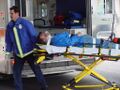 Stretcher
 -
Armed escort carrying the wounded to the Senegalese border, 1974
-
Fisher's Chair Stretcher, 1865
-
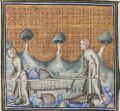 Stretcher
 -
Stretcher
-
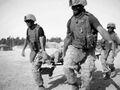 Marine CASEVAC Fallujah
 -
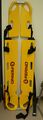 Stretcher


Medical Disclaimer: WikiMD is for informational purposes only and is not a substitute for professional medical advice. Content may be inaccurate or outdated and should not be used for diagnosis or treatment. Always consult your healthcare provider for medical decisions. Verify information with trusted sources such as CDC.gov and NIH.gov. By using this site, you agree that WikiMD is not liable for any outcomes related to its content. See full disclaimer.
Credits:Most images are courtesy of Wikimedia commons, and templates, categories Wikipedia, licensed under CC BY SA or similar.
Translate page: - East Asian
中文,
日本,
한국어,
South Asian
हिन्दी,
தமிழ்,
తెలుగు,
Urdu,
ಕನ್ನಡ,
Southeast Asian
Indonesian,
Vietnamese,
Thai,
မြန်မာဘာသာ,
বাংলা
European
español,
Deutsch,
français,
Greek,
português do Brasil,
polski,
română,
русский,
Nederlands,
norsk,
svenska,
suomi,
Italian
Middle Eastern & African
عربى,
Turkish,
Persian,
Hebrew,
Afrikaans,
isiZulu,
Kiswahili,
Other
Bulgarian,
Hungarian,
Czech,
Swedish,
മലയാളം,
मराठी,
ਪੰਜਾਬੀ,
ગુજરાતી,
Portuguese,
Ukrainian


