Coppicing
Coppicing is a traditional method of woodland management that involves the periodic cutting down of trees to ground level to stimulate growth. This practice allows for the continuous harvest of wood without the need to replant trees, making it a sustainable form of forestry. Coppicing has been practiced for millennia across Europe and Asia, primarily for the production of firewood, charcoal, and materials for fencing and building.
History[edit]
The origins of coppicing are ancient, with evidence suggesting that the technique was used by prehistoric people. It became an integral part of the rural economy in medieval Europe, where it was used to manage woodlands and provide resources for local communities. Coppicing allowed for the sustainable management of forests, ensuring a reliable supply of wood for various uses.
Technique[edit]
Coppicing involves cutting a tree down to its base, or stool, during the dormant winter months. This stimulates the growth of multiple shoots from the stump in the spring. These shoots grow rapidly, fueled by the root system's established energy reserves. After a number of years, which can vary depending on the species and the intended use of the wood, the coppice shoots are harvested, and the cycle begins anew.
Different types of coppicing exist, including:
- Simple coppicing, where all the shoots are removed at once.
- Coppice with standards, where selected trees are left to grow into full-sized timber trees amidst the coppiced stools.
Benefits[edit]
Coppicing offers numerous environmental and economic benefits, including:
- Biodiversity: Coppiced woodlands are rich in plant and animal species, as the cycle of cutting and regrowth creates a variety of habitats.
- Sustainability: It provides a renewable source of wood for fuel, construction, and other uses.
- Carbon sequestration: Young, rapidly growing trees absorb more carbon dioxide than mature trees, making coppicing a carbon-friendly practice.
- Economic opportunities: Coppicing supports local economies through the production of wood and wood products.
Species Suitable for Coppicing[edit]
Not all tree species are suitable for coppicing. Those that are include:
- Hazel (Corylus avellana)
- Oak (Quercus spp.)
- Ash (Fraxinus excelsior)
- Willow (Salix spp.)
- Chestnut (Castanea sativa)
Challenges[edit]
Despite its benefits, coppicing faces challenges in the modern world. These include:
- The decline in traditional skills and knowledge.
- Competition from cheaper, imported wood products.
- Changes in land use that reduce the area available for coppicing.
Conservation and Revival[edit]
Efforts are underway to conserve and revive coppicing as a sustainable woodland management practice. These include educational programs, the promotion of coppice products, and the restoration of coppiced woodlands.
See Also[edit]
References[edit]
<references/>
 | This environment-related article is a stub. You can help Wikipedia by adding missing information. |
-
 Coppicing
 -
 Coppicing
 -
 Coppicing
 -
 Coppicing
 -
 Coppicing
 -
 Coppicing
 -
 Coppicing
 -
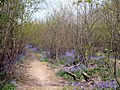 Coppicing
 -
 Coppicing
 -
 Coppicing
 -
 Coppicing


_coppiced_bowl.JPG)


Ad. Transform your health with W8MD Weight Loss, Sleep & MedSpa

Tired of being overweight?
Special offer:
Budget GLP-1 weight loss medications
- Semaglutide starting from $29.99/week and up with insurance for visit of $59.99 and up per week self pay.
- Tirzepatide starting from $45.00/week and up (dose dependent) or $69.99/week and up self pay
✔ Same-week appointments, evenings & weekends
Learn more:
- GLP-1 weight loss clinic NYC
- W8MD's NYC medical weight loss
- W8MD Philadelphia GLP-1 shots
- Philadelphia GLP-1 injections
- Affordable GLP-1 shots NYC
- Budget GLP-1 shots
|
WikiMD Medical Encyclopedia |
Medical Disclaimer: WikiMD is for informational purposes only and is not a substitute for professional medical advice. Content may be inaccurate or outdated and should not be used for diagnosis or treatment. Always consult your healthcare provider for medical decisions. Verify information with trusted sources such as CDC.gov and NIH.gov. By using this site, you agree that WikiMD is not liable for any outcomes related to its content. See full disclaimer.
Credits:Most images are courtesy of Wikimedia commons, and templates, categories Wikipedia, licensed under CC BY SA or similar.
Translate this page: - East Asian
中文,
日本,
한국어,
South Asian
हिन्दी,
தமிழ்,
తెలుగు,
Urdu,
ಕನ್ನಡ,
Southeast Asian
Indonesian,
Vietnamese,
Thai,
မြန်မာဘာသာ,
বাংলা
European
español,
Deutsch,
français,
Greek,
português do Brasil,
polski,
română,
русский,
Nederlands,
norsk,
svenska,
suomi,
Italian
Middle Eastern & African
عربى,
Turkish,
Persian,
Hebrew,
Afrikaans,
isiZulu,
Kiswahili,
Other
Bulgarian,
Hungarian,
Czech,
Swedish,
മലയാളം,
मराठी,
ਪੰਜਾਬੀ,
ગુજરાતી,
Portuguese,
Ukrainian
