Stoma
Stoma is a term used in medicine to refer to an artificial opening in the body, typically created through surgery. The term is derived from the Greek word "stoma," which means "mouth" or "opening." Stomas can be temporary or permanent and are used to allow bodily waste to exit the body when the natural route is not possible due to disease, injury, or surgery.
Types of Stomas[edit]
There are several types of stomas, each serving a different purpose and located in different parts of the body. These include:
- Colostomy: This type of stoma is created in the large intestine or colon. It is often used when the lower part of the colon is removed or needs to heal.
- Ileostomy: An ileostomy is a stoma that is created in the small intestine. It is often used when the entire colon is removed or needs to heal.
- Urostomy: This type of stoma is created in the urinary system to allow urine to exit the body when the bladder is not functioning properly.
- Tracheostomy: A tracheostomy is a stoma created in the trachea (windpipe) to assist with breathing.
Care and Management[edit]
Proper care and management of a stoma are essential to prevent complications such as infection and skin irritation. This includes regular cleaning of the stoma and surrounding skin, proper fitting of the ostomy appliance, and monitoring for signs of infection or other problems.
Complications[edit]
Complications can arise from having a stoma, including stoma blockage, parastomal hernia, and stoma prolapse. These complications can often be managed with medical intervention and lifestyle changes.
See Also[edit]

This WikiMD article can only be edited by registered and verified editors. You can log in or register.
-
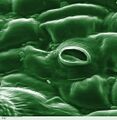 Tomato leaf stomate
 -
 Ligusterblad with stomata
 -
 Leaf underside with stomata
 -
 Stoma with accompanying guard cells
 -
 Differences in stomata opening throughout the day for C3 plants and CAM plants
 -
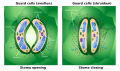 Opening and closing of stoma
 -
 Tomato stoma observed through immersion oil


.svg)


Advertise on WikiMD — 81,000+ full articles, ~900,000 total pages, ~250 million page views. Global reach, limited time promotional rates from $1/page/day. Learn more · View stats

Medical Disclaimer: WikiMD is for informational purposes only and is not a substitute for professional medical advice. Content may be inaccurate or outdated and should not be used for diagnosis or treatment. Always consult your healthcare provider for medical decisions. Verify information with trusted sources such as CDC.gov and NIH.gov. By using this site, you agree that WikiMD is not liable for any outcomes related to its content. See full disclaimer.
Credits:Most images are courtesy of Wikimedia commons, and templates, categories Wikipedia, licensed under CC BY SA or similar.
Translate page: - East Asian
中文,
日本,
한국어,
South Asian
हिन्दी,
தமிழ்,
తెలుగు,
Urdu,
ಕನ್ನಡ,
Southeast Asian
Indonesian,
Vietnamese,
Thai,
မြန်မာဘာသာ,
বাংলা
European
español,
Deutsch,
français,
Greek,
português do Brasil,
polski,
română,
русский,
Nederlands,
norsk,
svenska,
suomi,
Italian
Middle Eastern & African
عربى,
Turkish,
Persian,
Hebrew,
Afrikaans,
isiZulu,
Kiswahili,
Other
Bulgarian,
Hungarian,
Czech,
Swedish,
മലയാളം,
मराठी,
ਪੰਜਾਬੀ,
ગુજરાતી,
Portuguese,
Ukrainian

