Steroid hydroxylase
Steroid hydroxylase is a type of enzyme that plays a crucial role in the metabolism of steroids. It is responsible for the hydroxylation of steroids, a chemical process that introduces a hydroxyl group (-OH) into the steroid molecule. This process is essential for the biological activity of steroids, as it allows them to be converted into their active forms.
Function[edit]
Steroid hydroxylase enzymes are involved in the biosynthesis of corticosteroids, glucocorticoids, mineralocorticoids, and sex steroids. They catalyze the addition of a hydroxyl group to specific carbon atoms in the steroid molecule. This hydroxylation process is a key step in the activation of steroids, as it enables them to bind to their respective steroid receptors and exert their biological effects.
Types[edit]
There are several types of steroid hydroxylase enzymes, each of which hydroxylates a specific position on the steroid molecule. These include:
- 17α-hydroxylase: This enzyme is involved in the biosynthesis of glucocorticoids and sex steroids. It hydroxylates the 17th carbon atom of the steroid molecule.
- 21-hydroxylase: This enzyme is crucial for the production of mineralocorticoids and glucocorticoids. It hydroxylates the 21st carbon atom of the steroid molecule.
- 11β-hydroxylase: This enzyme is involved in the final steps of corticosteroid synthesis. It hydroxylates the 11th carbon atom of the steroid molecule.
Clinical significance[edit]
Deficiencies in steroid hydroxylase enzymes can lead to various medical conditions. For example, a deficiency in 21-hydroxylase can cause congenital adrenal hyperplasia, a group of inherited disorders that affect the adrenal glands. Similarly, a deficiency in 11β-hydroxylase can lead to a form of congenital adrenal hyperplasia characterized by hypertension and virilization.
See also[edit]
References[edit]

-
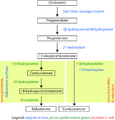 Corticosteroid biosynthetic pathway in rats
 -
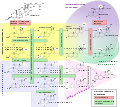 Steroidogenesis pathway
 -
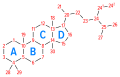 Steroid numbering system
 -
 Steroid hydroxylase


Medical Disclaimer: WikiMD is for informational purposes only and is not a substitute for professional medical advice. Content may be inaccurate or outdated and should not be used for diagnosis or treatment. Always consult your healthcare provider for medical decisions. Verify information with trusted sources such as CDC.gov and NIH.gov. By using this site, you agree that WikiMD is not liable for any outcomes related to its content. See full disclaimer.
Credits:Most images are courtesy of Wikimedia commons, and templates, categories Wikipedia, licensed under CC BY SA or similar.
Translate page: - East Asian
中文,
日本,
한국어,
South Asian
हिन्दी,
தமிழ்,
తెలుగు,
Urdu,
ಕನ್ನಡ,
Southeast Asian
Indonesian,
Vietnamese,
Thai,
မြန်မာဘာသာ,
বাংলা
European
español,
Deutsch,
français,
Greek,
português do Brasil,
polski,
română,
русский,
Nederlands,
norsk,
svenska,
suomi,
Italian
Middle Eastern & African
عربى,
Turkish,
Persian,
Hebrew,
Afrikaans,
isiZulu,
Kiswahili,
Other
Bulgarian,
Hungarian,
Czech,
Swedish,
മലയാളം,
मराठी,
ਪੰਜਾਬੀ,
ગુજરાતી,
Portuguese,
Ukrainian

