Glucocorticoid
Glucocorticoids are a class of corticosteroids, which are a class of steroid hormones. Glucocorticoids are corticosteroids that bind to the glucocorticoid receptor (GR), which is present in almost every vertebrate animal cell.
Function[edit]
The name glucocorticoid (glucose + cortex + steroid) is composed from its role in regulation of glucose metabolism, synthesis in the adrenal cortex, and its steroidal structure (see structure-activity relationship). A less common synonym is glucocorticosteroid.
Effects[edit]
Glucocorticoids are part of the feedback mechanism in the immune system, which reduces certain aspects of immune function, such as reduction of inflammation. They are therefore used in medicine to treat diseases caused by an overactive immune system, such as allergies, asthma, autoimmune diseases, and sepsis. Glucocorticoids have many diverse (pleiotropic) effects, including potentially harmful side effects, and as a result are rarely sold over the counter. They also interfere with some of the abnormal mechanisms in cancer cells, so they are used in high doses to treat cancer.
Pharmacology[edit]
Glucocorticoids may be used in low doses in adrenal insufficiency. In much higher doses, their most frequent use is in suppressing inflammation and the immune system, including autoimmune diseases and organ transplantation.
See also[edit]
- Corticosteroid
- Steroid hormones
- Adrenal cortex
- Immune system
- Inflammation
- Allergies
- Asthma
- Autoimmune diseases
- Sepsis
- Adrenal insufficiency
- Organ transplantation

This WikiMD article can only be edited by registered and verified editors. You can log in or register.
-
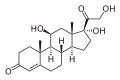 Cortisol structure
 -
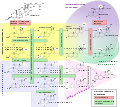 Steroidogenesis pathway
 -
Yerkes-Dodson Law Graph
-
 Dexamethasone structure
 -
Corticosteroid resistance mechanisms


Advertise on WikiMD — 81,000+ full articles, ~900,000 total pages, ~250 million page views. Global reach, limited time promotional rates from $1/page/day. Learn more · View stats


Translate page: - East Asian
中文,
日本,
한국어,
South Asian
हिन्दी,
தமிழ்,
తెలుగు,
Urdu,
ಕನ್ನಡ,
Southeast Asian
Indonesian,
Vietnamese,
Thai,
မြန်မာဘာသာ,
বাংলা
European
español,
Deutsch,
français,
Greek,
português do Brasil,
polski,
română,
русский,
Nederlands,
norsk,
svenska,
suomi,
Italian
Middle Eastern & African
عربى,
Turkish,
Persian,
Hebrew,
Afrikaans,
isiZulu,
Kiswahili,
Other
Bulgarian,
Hungarian,
Czech,
Swedish,
മലയാളം,
मराठी,
ਪੰਜਾਬੀ,
ગુજરાતી,
Portuguese,
Ukrainian
About WikiMD • Contact • Disclaimer • Privacy • Copyright • Site statistics
Some content and images may originate from Wikimedia Commons or Wikipedia and remain subject to their stated licenses. Unless otherwise noted, eligible WikiMD content is available under CC BY-SA 4.0.
WikiMD Wellnesspedia — Free health & wellness information for patients, students, and health professionals.


