Stem-cell therapy
Stem-cell therapy is the use of stem cells to treat or prevent a disease or condition. The most well-known type of stem cell therapy is bone marrow transplant, but some therapies derived from umbilical cord blood are also in use.
History[edit]
Stem-cell therapy has been in use since the late 20th century. The first successful bone marrow transplant was performed in 1968, and since then, stem-cell therapy has been used to treat a variety of diseases and conditions, including leukemia, lymphoma, and sickle cell disease.
Types of Stem Cells[edit]
There are several types of stem cells that can be used in therapy, including:
- Embryonic stem cells: These are derived from embryos. Most embryonic stem cells are derived from embryos that have been fertilized in vitro and then donated for research purposes.
- Adult stem cells: These are found in small numbers in most adult tissues, such as bone marrow or fat.
- Induced pluripotent stem cells: These are adult cells that have been genetically reprogrammed to an embryonic stem cell–like state.
Applications[edit]
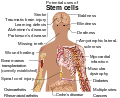
Stem-cell therapy has been used to treat a variety of diseases and conditions, including:
- Blood disorders: Stem cells have been used to treat diseases such as leukemia and lymphoma.
- Neurodegenerative diseases: Research is ongoing into the use of stem cells to treat diseases such as Parkinson's, Alzheimer's, and ALS.
- Spinal cord injuries: Stem cells have been used to promote repair and regeneration of the spinal cord after injury.
Risks and Controversies[edit]
Like all medical treatments, stem-cell therapy carries risks, including the risk of rejection if the stem cells are not a good match for the patient. There are also ethical controversies surrounding the use of embryonic stem cells.
See Also[edit]
References[edit]

This WikiMD article can only be edited by registered and verified editors. You can log in or register.
-
 Stem-cell_therapy
 -
 Stem-cell_therapy


Medical Disclaimer: WikiMD is for informational purposes only and is not a substitute for professional medical advice. Content may be inaccurate or outdated and should not be used for diagnosis or treatment. Always consult your healthcare provider for medical decisions. Verify information with trusted sources such as CDC.gov and NIH.gov. By using this site, you agree that WikiMD is not liable for any outcomes related to its content. See full disclaimer.
Credits:Most images are courtesy of Wikimedia commons, and templates, categories Wikipedia, licensed under CC BY SA or similar.
Translate page: - East Asian
中文,
日本,
한국어,
South Asian
हिन्दी,
தமிழ்,
తెలుగు,
Urdu,
ಕನ್ನಡ,
Southeast Asian
Indonesian,
Vietnamese,
Thai,
မြန်မာဘာသာ,
বাংলা
European
español,
Deutsch,
français,
Greek,
português do Brasil,
polski,
română,
русский,
Nederlands,
norsk,
svenska,
suomi,
Italian
Middle Eastern & African
عربى,
Turkish,
Persian,
Hebrew,
Afrikaans,
isiZulu,
Kiswahili,
Other
Bulgarian,
Hungarian,
Czech,
Swedish,
മലയാളം,
मराठी,
ਪੰਜਾਬੀ,
ગુજરાતી,
Portuguese,
Ukrainian

