Steak au poivre

Steak au poivre is a French dish that consists of a steak, traditionally a filet mignon, coated with loosely cracked peppercorns and then cooked. The peppercorns form a crust on the steak when cooked and provide a pungent but complementary counterpoint to the rich flavor of the high-quality beef.
Ingredients and Preparation[edit]
The primary ingredients in steak au poivre are beef steak, black peppercorns, butter, and heavy cream. Some variations of the recipe also include cognac or brandy, which is flambéed to add depth of flavor and to reduce the alcohol content. The steak is coated with the cracked peppercorns, which are usually crushed or ground just before use to ensure freshness and flavor. The steak is then seared in a hot skillet to form a crust and to seal in the juices. The final step in the preparation is the creation of a pan sauce made from the fond (the caramelized drippings left in the pan), butter, and cream.
Variations[edit]
There are several variations of steak au poivre, including those that use different types of peppercorns, such as green or pink, or a mixture of several types. Some recipes also include other ingredients in the sauce, such as shallots, beef stock, or different types of alcohol.
Serving[edit]
Steak au poivre is traditionally served with pommes frites (French fries) or pommes de terre sautées (sautéed potatoes). The dish is often accompanied by a green salad or a side of vegetables.
History[edit]
The exact origins of steak au poivre are unclear, but the dish is most commonly associated with classic French cuisine. It is thought to have been popularized in the late 19th or early 20th century, during the period of French culinary dominance.
See also[edit]

-
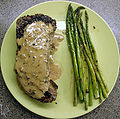
 Steak au poivre served with vegetables
 -
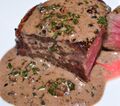
 Close-up of steak au poivre with sauce
 -
 Mexican pepper steak at restaurant Pancho Villa, Tampere
.jpg)


Medical Disclaimer: WikiMD is for informational purposes only and is not a substitute for professional medical advice. Content may be inaccurate or outdated and should not be used for diagnosis or treatment. Always consult your healthcare provider for medical decisions. Verify information with trusted sources such as CDC.gov and NIH.gov. By using this site, you agree that WikiMD is not liable for any outcomes related to its content. See full disclaimer.
Credits:Most images are courtesy of Wikimedia commons, and templates, categories Wikipedia, licensed under CC BY SA or similar.
Translate page: - East Asian
中文,
日本,
한국어,
South Asian
हिन्दी,
தமிழ்,
తెలుగు,
Urdu,
ಕನ್ನಡ,
Southeast Asian
Indonesian,
Vietnamese,
Thai,
မြန်မာဘာသာ,
বাংলা
European
español,
Deutsch,
français,
Greek,
português do Brasil,
polski,
română,
русский,
Nederlands,
norsk,
svenska,
suomi,
Italian
Middle Eastern & African
عربى,
Turkish,
Persian,
Hebrew,
Afrikaans,
isiZulu,
Kiswahili,
Other
Bulgarian,
Hungarian,
Czech,
Swedish,
മലയാളം,
मराठी,
ਪੰਜਾਬੀ,
ગુજરાતી,
Portuguese,
Ukrainian

