Spring pancake
Spring Pancake is a traditional Chinese food item that is often consumed during the Lunar New Year and the Spring Festival. It is also known as Chūnbǐng in Mandarin and is a popular part of the Chinese cuisine.
History[edit]
The tradition of eating Spring Pancakes dates back to the Eastern Jin Dynasty (317-420 AD). It was believed that eating these pancakes would help to ward off evil and bring good luck for the coming year. The practice has continued for over a thousand years and is still prevalent in modern Chinese society.
Preparation[edit]
Spring Pancakes are made from dough, which is rolled out into thin circles and cooked on a hot griddle. The dough is typically made from wheat flour, water, and salt. The pancakes are then filled with various ingredients such as vegetables, meat, and sauces. The fillings can vary based on personal preference and regional variations.
Cultural Significance[edit]
In Chinese culture, Spring Pancakes are not just a food item, but also carry significant cultural and symbolic meanings. They are often associated with the renewal of life and the arrival of spring. The round shape of the pancake symbolizes unity and completeness, while the fillings represent abundance and prosperity.
Variations[edit]
There are many regional variations of Spring Pancakes across China. In northern China, the pancakes are often served with a variety of fillings such as stir-fried vegetables and meats. In southern China, the pancakes are typically thinner and crispier, and are often served with sweet fillings.
See Also[edit]

-
 Spring pancake
 -
 Chunbing pancakes from Harbin, China
 -
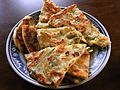 Spring onion pancake
 -
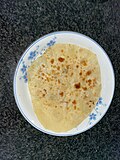 Lao bing
 -
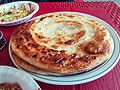 Paratha, a dough fried flatbread native to India and Pakistan


Medical Disclaimer: WikiMD is for informational purposes only and is not a substitute for professional medical advice. Content may be inaccurate or outdated and should not be used for diagnosis or treatment. Always consult your healthcare provider for medical decisions. Verify information with trusted sources such as CDC.gov and NIH.gov. By using this site, you agree that WikiMD is not liable for any outcomes related to its content. See full disclaimer.
Credits:Most images are courtesy of Wikimedia commons, and templates, categories Wikipedia, licensed under CC BY SA or similar.
Translate this page: - East Asian
中文,
日本,
한국어,
South Asian
हिन्दी,
தமிழ்,
తెలుగు,
Urdu,
ಕನ್ನಡ,
Southeast Asian
Indonesian,
Vietnamese,
Thai,
မြန်မာဘာသာ,
বাংলা
European
español,
Deutsch,
français,
Greek,
português do Brasil,
polski,
română,
русский,
Nederlands,
norsk,
svenska,
suomi,
Italian
Middle Eastern & African
عربى,
Turkish,
Persian,
Hebrew,
Afrikaans,
isiZulu,
Kiswahili,
Other
Bulgarian,
Hungarian,
Czech,
Swedish,
മലയാളം,
मराठी,
ਪੰਜਾਬੀ,
ગુજરાતી,
Portuguese,
Ukrainian
