Sorbetes
Sorbetes is a traditional Philippine version of ice cream. It is distinctively made from coconut milk, unlike most ice creams that are made from animal milk. Sorbetes is also known as dirty ice cream but this term is considered misleading as the product is clean and safe to eat. The term is used to distinguish it from the commercially produced ice cream sold in stores.
History[edit]
The history of Sorbetes dates back to the Spanish colonial period in the Philippines. It was during this time that the method of freezing desserts was introduced. The original Sorbetes was made using a manual crank and was sold in the streets using colorful wooden carts, hence the term "street food".
Preparation[edit]
The preparation of Sorbetes involves the use of a traditional ice cream maker called a sorbetero. The sorbetero is a drum-like apparatus that is filled with ice and salt to create a low temperature. The ice cream mixture is placed in a smaller canister that is inserted into the sorbetero. The mixture is then churned manually using a crank until it reaches the desired consistency.
The main ingredient of Sorbetes is coconut milk, but other ingredients such as sugar, flavorings, and additives are also used. The most common flavors of Sorbetes are chocolate, cheese, and mango, but other tropical flavors such as ube and avocado are also popular.
Serving[edit]
Sorbetes is typically served in small wafer or sugar cones, but it can also be served in bread buns, a style known as "monay". It is a popular dessert or snack, especially during the hot summer months.
Cultural significance[edit]
Sorbetes holds a significant place in Philippine culture. It is a symbol of the Filipino's resourcefulness and creativity, as it is a product that was adapted from foreign influence and made uniquely Filipino by using local ingredients and methods. It is also a common sight in local fiestas and celebrations, adding to its cultural significance.
See also[edit]


-
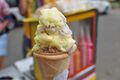 Cheese and chocolate sorbetes
 -
 Chasing Sorbeteros
 -
 Sorbetero in San Luis, Pampanga
 -
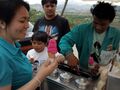 Sorbetes
 -
 Rizal Park Landmarks
 -
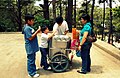 Mamang Sorbetero
 -
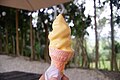 Mango Ice Cream at Molave Milk Station
.jpg)

.jpg)


Medical Disclaimer: WikiMD is for informational purposes only and is not a substitute for professional medical advice. Content may be inaccurate or outdated and should not be used for diagnosis or treatment. Always consult your healthcare provider for medical decisions. Verify information with trusted sources such as CDC.gov and NIH.gov. By using this site, you agree that WikiMD is not liable for any outcomes related to its content. See full disclaimer.
Credits:Most images are courtesy of Wikimedia commons, and templates, categories Wikipedia, licensed under CC BY SA or similar.
Translate page: - East Asian
中文,
日本,
한국어,
South Asian
हिन्दी,
தமிழ்,
తెలుగు,
Urdu,
ಕನ್ನಡ,
Southeast Asian
Indonesian,
Vietnamese,
Thai,
မြန်မာဘာသာ,
বাংলা
European
español,
Deutsch,
français,
Greek,
português do Brasil,
polski,
română,
русский,
Nederlands,
norsk,
svenska,
suomi,
Italian
Middle Eastern & African
عربى,
Turkish,
Persian,
Hebrew,
Afrikaans,
isiZulu,
Kiswahili,
Other
Bulgarian,
Hungarian,
Czech,
Swedish,
മലയാളം,
मराठी,
ਪੰਜਾਬੀ,
ગુજરાતી,
Portuguese,
Ukrainian

