Somatostatin inhibitor
Somatostatin inhibitors are a class of pharmaceutical drugs that function by inhibiting the action of the hormone somatostatin. Somatostatin, also known as growth hormone-inhibiting hormone (GHIH), is a peptide hormone that regulates the endocrine system and affects neurotransmission and cell proliferation via interaction with G protein-coupled receptors. It inhibits the secretion of several other hormones, including growth hormone, thyroid-stimulating hormone, and insulin.
Mechanism of Action[edit]
Somatostatin inhibitors work by blocking the activity of somatostatin receptors. Since somatostatin acts to inhibit the release of many hormones, its inhibition leads to an increase in the levels of these hormones. The mechanism of action of somatostatin inhibitors involves binding to the somatostatin receptors, thereby preventing somatostatin from exerting its effects. This can be beneficial in conditions where the reduction of somatostatin activity can lead to therapeutic outcomes.
Clinical Uses[edit]
Somatostatin inhibitors are used in the treatment of various medical conditions. One of the primary uses is in the management of acromegaly, a condition characterized by excessive growth of the hands, feet, and face, due to overproduction of growth hormone. By inhibiting somatostatin, these drugs can increase the release of somatostatin, paradoxically reducing the levels of growth hormone and improving symptoms of acromegaly.
Another significant use of somatostatin inhibitors is in the treatment of certain types of neuroendocrine tumors. These tumors may secrete excessive amounts of hormones, leading to various symptoms. Somatostatin inhibitors can help control these symptoms by inhibiting hormone secretion.
Side Effects[edit]
The use of somatostatin inhibitors can lead to several side effects due to the widespread role of somatostatin in the body. Common side effects include gastrointestinal disturbances, gallstones, and glucose metabolism disorders. It is essential for patients to be monitored closely for these side effects during treatment.
Development and Approval[edit]
The development of somatostatin inhibitors has involved extensive research into the structure and function of somatostatin and its receptors. This has led to the creation of drugs that can specifically target somatostatin receptors with high affinity, thereby providing therapeutic benefits in conditions associated with excessive hormone secretion.
Conclusion[edit]
Somatostatin inhibitors represent a critical advancement in the treatment of conditions like acromegaly and neuroendocrine tumors. By targeting the somatostatin receptors, these drugs can modulate the endocrine system to achieve desired therapeutic effects. Ongoing research continues to explore new applications and improve the efficacy and safety of these medications.

-
 Somatostatin structure
 -
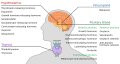 Endocrine and central nervous system
 -
 Tetraxetan structure
 -
 NODAGA structure
 -
 Cyclosomatostatin structure


Medical Disclaimer: WikiMD is for informational purposes only and is not a substitute for professional medical advice. Content may be inaccurate or outdated and should not be used for diagnosis or treatment. Always consult your healthcare provider for medical decisions. Verify information with trusted sources such as CDC.gov and NIH.gov. By using this site, you agree that WikiMD is not liable for any outcomes related to its content. See full disclaimer.
Credits:Most images are courtesy of Wikimedia commons, and templates, categories Wikipedia, licensed under CC BY SA or similar.
Translate page: - East Asian
中文,
日本,
한국어,
South Asian
हिन्दी,
தமிழ்,
తెలుగు,
Urdu,
ಕನ್ನಡ,
Southeast Asian
Indonesian,
Vietnamese,
Thai,
မြန်မာဘာသာ,
বাংলা
European
español,
Deutsch,
français,
Greek,
português do Brasil,
polski,
română,
русский,
Nederlands,
norsk,
svenska,
suomi,
Italian
Middle Eastern & African
عربى,
Turkish,
Persian,
Hebrew,
Afrikaans,
isiZulu,
Kiswahili,
Other
Bulgarian,
Hungarian,
Czech,
Swedish,
മലയാളം,
मराठी,
ਪੰਜਾਬੀ,
ગુજરાતી,
Portuguese,
Ukrainian

