Somatopleuric mesenchyme
Somatopleuric mesenchyme is a type of mesenchymal tissue that originates from the embryonic somatopleure. It plays a crucial role in the development of various structures in the body, including the limbs, heart, and lungs.
Origin[edit]
The somatopleuric mesenchyme is derived from the lateral plate mesoderm, which is one of the three primary germ layers in the early embryo. The lateral plate mesoderm splits into two layers: the splanchnopleuric mesenchyme (which contributes to the formation of the visceral organs) and the somatopleuric mesenchyme.
Role in Development[edit]
The somatopleuric mesenchyme contributes to the formation of several structures in the body:
- Limb Formation: The somatopleuric mesenchyme forms the limb buds, which later differentiate into the bones, muscles, and connective tissues of the limbs.
- Heart Formation: The somatopleuric mesenchyme contributes to the formation of the pericardial sac and the epicardium, the outermost layer of the heart.
- Lung Formation: The somatopleuric mesenchyme forms the pleural sacs that surround the lungs.
Clinical Significance[edit]
Abnormalities in the somatopleuric mesenchyme can lead to various developmental disorders, such as congenital limb deformities, congenital heart defects, and pulmonary hypoplasia.
See Also[edit]
References[edit]

-
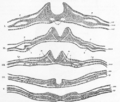 Somatopleuric mesenchyme
 -
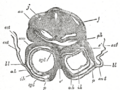 Somatopleuric mesenchyme
 -
 Somatopleuric mesenchyme


Medical Disclaimer: WikiMD is for informational purposes only and is not a substitute for professional medical advice. Content may be inaccurate or outdated and should not be used for diagnosis or treatment. Always consult your healthcare provider for medical decisions. Verify information with trusted sources such as CDC.gov and NIH.gov. By using this site, you agree that WikiMD is not liable for any outcomes related to its content. See full disclaimer.
Credits:Most images are courtesy of Wikimedia commons, and templates, categories Wikipedia, licensed under CC BY SA or similar.
Translate page: - East Asian
中文,
日本,
한국어,
South Asian
हिन्दी,
தமிழ்,
తెలుగు,
Urdu,
ಕನ್ನಡ,
Southeast Asian
Indonesian,
Vietnamese,
Thai,
မြန်မာဘာသာ,
বাংলা
European
español,
Deutsch,
français,
Greek,
português do Brasil,
polski,
română,
русский,
Nederlands,
norsk,
svenska,
suomi,
Italian
Middle Eastern & African
عربى,
Turkish,
Persian,
Hebrew,
Afrikaans,
isiZulu,
Kiswahili,
Other
Bulgarian,
Hungarian,
Czech,
Swedish,
മലയാളം,
मराठी,
ਪੰਜਾਬੀ,
ગુજરાતી,
Portuguese,
Ukrainian

