Sintering
Sintering is a heat treatment process used to increase the strength and structural integrity of materials, especially powders. It involves the application of heat below the melting point of the material, causing the particles to bond together through diffusion and other mechanisms. Sintering is a critical process in the production of many industrial, dental, and medical components, including ceramics, metals, and plastics.
Process[edit]
The sintering process can be divided into three stages: initial, intermediate, and final. During the initial stage, the heat causes the outer surfaces of the particles to adhere to each other, forming a weak bond and reducing the porosity of the material. In the intermediate stage, the temperature and time of exposure are increased to enhance diffusion, leading to stronger bonds and densification of the material. The final stage involves further densification and grain growth, which increases the strength and mechanical properties of the material.
Types of Sintering[edit]
There are several types of sintering, each suited to different materials and applications:
- Solid State Sintering: The most common form, where diffusion of atoms occurs in the solid state to bond particles together.
- Liquid Phase Sintering: Involves a liquid phase that facilitates the sintering of solid particles at temperatures below their melting points.
- Pressureless Sintering: Conducted at atmospheric pressure, suitable for materials that do not require applied pressure to densify.
- Hot Pressing: Combines pressure and heat to densify the material, resulting in higher density and strength.
- Spark Plasma Sintering: Utilizes a pulsed electric current to rapidly heat and densify materials.
Applications[edit]
Sintering has a wide range of applications across various industries:
- In the automotive industry, sintering is used to produce complex parts like gears and bearings.
- In electronics, sintering is employed in the fabrication of multilayer ceramic capacitors and other components.
- The medical field utilizes sintering for the production of implants and prosthetics, taking advantage of the process's ability to produce materials compatible with human tissue.
- Aerospace applications include the manufacturing of components that require high strength-to-weight ratios and thermal resistance.
Advantages and Disadvantages[edit]
Advantages of sintering include the ability to produce complex shapes, efficient material utilization, and the achievement of high material properties. However, the process also has disadvantages, such as limitations on the size and thickness of parts, and the potential for defects such as porosity and inhomogeneity.
Environmental Impact[edit]
Sintering processes, particularly those involving metals and ceramics, can have significant environmental impacts due to energy consumption and emissions. However, advancements in technology are leading to more energy-efficient sintering methods and the development of materials with lower environmental footprints.

This article is a metallurgy-related stub. You can help WikiMD by expanding it!
-
 Diagram illustrating the sintering process
 -
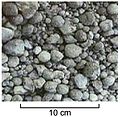 Clinker used in the sintering process
 -
 Cross section of a sintering tool and part
 -
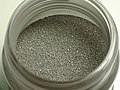 Iron powder used in sintering


Ad. Transform your life with W8MD's
GLP-1 weight loss injections special from $29.99 with insurance
|
WikiMD Medical Encyclopedia |
Medical Disclaimer: WikiMD is for informational purposes only and is not a substitute for professional medical advice. Content may be inaccurate or outdated and should not be used for diagnosis or treatment. Always consult your healthcare provider for medical decisions. Verify information with trusted sources such as CDC.gov and NIH.gov. By using this site, you agree that WikiMD is not liable for any outcomes related to its content. See full disclaimer.
Credits:Most images are courtesy of Wikimedia commons, and templates, categories Wikipedia, licensed under CC BY SA or similar.
Translate this page: - East Asian
中文,
日本,
한국어,
South Asian
हिन्दी,
தமிழ்,
తెలుగు,
Urdu,
ಕನ್ನಡ,
Southeast Asian
Indonesian,
Vietnamese,
Thai,
မြန်မာဘာသာ,
বাংলা
European
español,
Deutsch,
français,
Greek,
português do Brasil,
polski,
română,
русский,
Nederlands,
norsk,
svenska,
suomi,
Italian
Middle Eastern & African
عربى,
Turkish,
Persian,
Hebrew,
Afrikaans,
isiZulu,
Kiswahili,
Other
Bulgarian,
Hungarian,
Czech,
Swedish,
മലയാളം,
मराठी,
ਪੰਜਾਬੀ,
ગુજરાતી,
Portuguese,
Ukrainian
