Shichirin
Shichirin is a small, portable charcoal grill that is traditionally used in Japanese cuisine. It is also known as a hibachi in some regions, although this term can also refer to a different type of cooking device. The shichirin is typically made from clay or ceramic, and it is designed to concentrate heat for efficient cooking.
History[edit]
The shichirin has been used in Japan for centuries, and it is believed to have originated during the Edo period (1603–1868). It was traditionally used for both indoor and outdoor cooking, although modern safety concerns have led to it being used primarily outdoors. The shichirin's compact size and portability made it a popular choice for street food vendors, and it remains a common sight at festivals and outdoor events.
Design and Use[edit]
A shichirin is typically cylindrical or box-shaped, with a grilling surface that is placed over the charcoal. The grill can be made from a variety of materials, including wire mesh, cast iron, or ceramic. The charcoal used in a shichirin is often a special type known as binchotan, which burns at a high temperature and produces little smoke.
Food cooked on a shichirin is often skewered, although it can also be grilled directly on the surface. Common dishes include yakitori (grilled chicken skewers), yakiniku (grilled meat), and robata (a type of Japanese barbecue).
Cultural Significance[edit]
The shichirin is deeply ingrained in Japanese culture, and it is often associated with communal outdoor cooking and socializing. It is a common feature of izakaya (Japanese pubs), where patrons can grill their own food at the table. The shichirin is also used in certain Japanese cooking rituals, such as the New Year's tradition of mochitsuki, in which mochi (rice cakes) are grilled on the shichirin.
See Also[edit]

Shichirin[edit]
-
 Shichirin Sanma Japan
 -
 Sithirin
 -
 Edo personal stove
 -
 Shichirin Mokutan
 -
 Shichirin Sausage Japan
 -
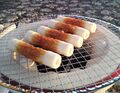 Tikutikutikuwa
 -
 Japanese Shichirin Hibachi Conro
 -
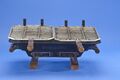 Hibachi style grill


.jpg)


Medical Disclaimer: WikiMD is for informational purposes only and is not a substitute for professional medical advice. Content may be inaccurate or outdated and should not be used for diagnosis or treatment. Always consult your healthcare provider for medical decisions. Verify information with trusted sources such as CDC.gov and NIH.gov. By using this site, you agree that WikiMD is not liable for any outcomes related to its content. See full disclaimer.
Credits:Most images are courtesy of Wikimedia commons, and templates, categories Wikipedia, licensed under CC BY SA or similar.
Translate page: - East Asian
中文,
日本,
한국어,
South Asian
हिन्दी,
தமிழ்,
తెలుగు,
Urdu,
ಕನ್ನಡ,
Southeast Asian
Indonesian,
Vietnamese,
Thai,
မြန်မာဘာသာ,
বাংলা
European
español,
Deutsch,
français,
Greek,
português do Brasil,
polski,
română,
русский,
Nederlands,
norsk,
svenska,
suomi,
Italian
Middle Eastern & African
عربى,
Turkish,
Persian,
Hebrew,
Afrikaans,
isiZulu,
Kiswahili,
Other
Bulgarian,
Hungarian,
Czech,
Swedish,
മലയാളം,
मराठी,
ਪੰਜਾਬੀ,
ગુજરાતી,
Portuguese,
Ukrainian

