Setanaxib
Setanaxib is a small molecule drug that has been under investigation for its potential therapeutic effects in various diseases, particularly those involving oxidative stress and fibrosis. Setanaxib works primarily as a GKT-137831, targeting the NOX enzymes which are a family of enzymes involved in the production of reactive oxygen species (ROS). By inhibiting these enzymes, setanaxib aims to reduce oxidative stress and mitigate its harmful effects on the body, which can include inflammation and tissue damage.
Mechanism of Action[edit]
Setanaxib's mechanism of action involves the inhibition of the NADPH oxidase (NOX) family of enzymes, specifically NOX1 and NOX4. These enzymes play a critical role in the generation of reactive oxygen species (ROS), which are chemically reactive molecules containing oxygen. While ROS are essential for several biological processes, excessive ROS production can lead to oxidative stress, contributing to cellular damage, inflammation, and fibrotic processes. By inhibiting NOX1 and NOX4, setanaxib reduces ROS production, potentially alleviating oxidative stress and its associated pathologies.
Clinical Trials[edit]
Setanaxib has been evaluated in various clinical trials for its efficacy and safety in treating conditions associated with oxidative stress and fibrosis. These conditions include, but are not limited to, non-alcoholic steatohepatitis (NASH), idiopathic pulmonary fibrosis (IPF), and diabetic nephropathy. The outcomes of these trials are crucial for determining the therapeutic potential of setanaxib in these diseases, which currently have limited treatment options.
Potential Indications[edit]
The primary indications for setanaxib are diseases characterized by excessive oxidative stress and fibrosis. These include:
- Non-alcoholic steatohepatitis (NASH): A liver disease characterized by fat accumulation, inflammation, and fibrosis.
- Idiopathic pulmonary fibrosis (IPF): A chronic, progressive lung disease marked by fibrosis and scarring of lung tissue.
- Diabetic nephropathy: Kidney damage resulting from long-term diabetes.
Safety and Efficacy[edit]
The safety and efficacy of setanaxib are determined through clinical trials. These trials assess not only the drug's therapeutic effects but also its side effect profile. Like all drugs, setanaxib may have side effects, but its approval for use will depend on a favorable balance between its benefits and risks.
Future Directions[edit]
Research on setanaxib continues to explore its potential in treating a wider range of diseases associated with oxidative stress and fibrosis. Future studies may also investigate its use in combination with other therapies to enhance its therapeutic effects or to target multiple pathways involved in disease processes.

-
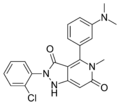 Setanaxib

Medical Disclaimer: WikiMD is for informational purposes only and is not a substitute for professional medical advice. Content may be inaccurate or outdated and should not be used for diagnosis or treatment. Always consult your healthcare provider for medical decisions. Verify information with trusted sources such as CDC.gov and NIH.gov. By using this site, you agree that WikiMD is not liable for any outcomes related to its content. See full disclaimer.
Credits:Most images are courtesy of Wikimedia commons, and templates, categories Wikipedia, licensed under CC BY SA or similar.
Translate this page: - East Asian
中文,
日本,
한국어,
South Asian
हिन्दी,
தமிழ்,
తెలుగు,
Urdu,
ಕನ್ನಡ,
Southeast Asian
Indonesian,
Vietnamese,
Thai,
မြန်မာဘာသာ,
বাংলা
European
español,
Deutsch,
français,
Greek,
português do Brasil,
polski,
română,
русский,
Nederlands,
norsk,
svenska,
suomi,
Italian
Middle Eastern & African
عربى,
Turkish,
Persian,
Hebrew,
Afrikaans,
isiZulu,
Kiswahili,
Other
Bulgarian,
Hungarian,
Czech,
Swedish,
മലയാളം,
मराठी,
ਪੰਜਾਬੀ,
ગુજરાતી,
Portuguese,
Ukrainian

