Serine hydroxymethyltransferase
Serine hydroxymethyltransferase (SHMT) is an enzyme that plays a crucial role in the metabolism of amino acids and in folate-mediated one-carbon metabolism. It catalyzes the reversible conversion of serine to glycine and tetrahydrofolate (THF) to 5,10-methylene-THF. This reaction is fundamental in the biosynthesis of purines, thymidylate, and other important biomolecules. SHMT exists in two isoforms in mammals: SHMT1, which is predominantly located in the cytosol, and SHMT2, which is found in the mitochondria.
Function[edit]
SHMT is involved in the interconversion of serine and glycine, which is a critical process in cell metabolism. Serine is converted to glycine, and in the process, a one-carbon unit is transferred to tetrahydrofolate (THF), producing 5,10-methylene-THF. This reaction is vital for the synthesis of nucleotides and other essential cellular components. The enzyme's role in folate metabolism also implicates it in the regulation of homocysteine levels, thus linking it to cardiovascular health and disease.
Structure[edit]
The structure of SHMT has been studied extensively through crystallography. The enzyme is a dimer, with each subunit containing a PLP (pyridoxal-5'-phosphate) cofactor at the active site. The active site is where the conversion of serine and THF takes place. The structure of SHMT provides insights into its catalytic mechanism and has implications for the design of inhibitors that could serve as potential therapeutic agents.
Clinical Significance[edit]
Alterations in SHMT activity have been associated with various diseases, including cancer, neural tube defects, and cardiovascular disease. Overexpression of SHMT2 has been observed in several types of cancer, suggesting a role in tumorigenesis. This is likely due to the enzyme's involvement in nucleotide synthesis, which is upregulated in rapidly dividing cancer cells. In contrast, genetic polymorphisms in SHMT1 have been linked to susceptibility to neural tube defects, underscoring the importance of folate metabolism in embryonic development.
Genetics[edit]
The genes encoding the cytosolic and mitochondrial isoforms of SHMT are SHMT1 and SHMT2, respectively. These genes are subject to regulation by various factors, including nutritional status and cellular demand for nucleotides. Understanding the genetic regulation of SHMT is crucial for elucidating its role in health and disease.
Therapeutic Implications[edit]
Given its role in nucleotide synthesis and folate metabolism, SHMT is a potential target for cancer therapy. Inhibitors of SHMT could disrupt the proliferation of cancer cells by limiting the availability of nucleotides necessary for DNA replication. Additionally, modulation of SHMT activity has potential implications for the treatment of diseases related to folate metabolism, such as cardiovascular diseases and neural tube defects.
Conclusion[edit]
Serine hydroxymethyltransferase is a pivotal enzyme in amino acid metabolism and folate-mediated one-carbon metabolism. Its roles in nucleotide synthesis, homocysteine regulation, and disease association highlight its importance in biochemistry and medicine. Ongoing research into the structure, function, and regulation of SHMT promises to uncover new therapeutic strategies for treating diseases associated with this enzyme.
.svg) | This biochemistry article is a stub. You can help WikiMD by expanding the page. |
 | This enzyme-related article is a stub. You can help WikiMD by expanding the page. |
Serine hydroxymethyltransferase gallery[edit]
-
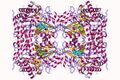 6m5w2
6m5w2 -
 EcSHMTPyMol
 -
 Serine hydroxymethyltransferase formaldehyde intermediate mechanism
 -
 Biological role of serine hydroxymethyltransferase


Medical Disclaimer: WikiMD is for informational purposes only and is not a substitute for professional medical advice. Content may be inaccurate or outdated and should not be used for diagnosis or treatment. Always consult your healthcare provider for medical decisions. Verify information with trusted sources such as CDC.gov and NIH.gov. By using this site, you agree that WikiMD is not liable for any outcomes related to its content. See full disclaimer.
Credits:Most images are courtesy of Wikimedia commons, and templates, categories Wikipedia, licensed under CC BY SA or similar.
Translate page: - East Asian
中文,
日本,
한국어,
South Asian
हिन्दी,
தமிழ்,
తెలుగు,
Urdu,
ಕನ್ನಡ,
Southeast Asian
Indonesian,
Vietnamese,
Thai,
မြန်မာဘာသာ,
বাংলা
European
español,
Deutsch,
français,
Greek,
português do Brasil,
polski,
română,
русский,
Nederlands,
norsk,
svenska,
suomi,
Italian
Middle Eastern & African
عربى,
Turkish,
Persian,
Hebrew,
Afrikaans,
isiZulu,
Kiswahili,
Other
Bulgarian,
Hungarian,
Czech,
Swedish,
മലയാളം,
मराठी,
ਪੰਜਾਬੀ,
ગુજરાતી,
Portuguese,
Ukrainian

