Second metatarsal bone
The Second Metatarsal Bone is the longest metatarsal bone in the human foot, located between the first metatarsal bone and the third metatarsal bone. It is a part of the metatarsus, the group of five long bones in the foot.
Etymology[edit]
The term "metatarsal" is derived from the Greek words "meta," meaning "after," and "tarsos," meaning "ankle." The second metatarsal bone, therefore, is the bone that is "after" the ankle, specifically the second one in the series.
Anatomy[edit]
The second metatarsal bone is located in the central part of the foot. It is connected to the cuboid bone and the three cuneiform bones at the proximal end, and the second toe at the distal end. The bone is longer and thinner than the other metatarsal bones.
Function[edit]
The second metatarsal bone, like the other metatarsal bones, plays a crucial role in weight-bearing and movement. It helps to distribute the body's weight across the foot during walking, running, and standing.
Clinical Significance[edit]
Injuries to the second metatarsal bone, such as fractures or stress fractures, are common in athletes and dancers. These injuries can result from overuse, trauma, or wearing inappropriate footwear. Treatment typically involves rest, immobilization, and in some cases, surgery.
Related Terms[edit]

This WikiMD article can only be edited by registered and verified editors. You can log in or register.
Second_metatarsal_bone[edit]
-
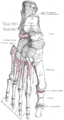 Gray's Anatomy Plate 268
 -
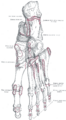 Gray's Anatomy Plate 269
 -
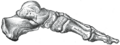 Gray's Anatomy Plate 290
 -
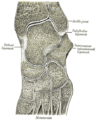 Gray's Anatomy Plate 360
 -
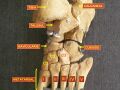 Foot bones - tarsus, metatarsus
 -
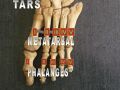 Foot bones - metatarsus and phalanges
 -
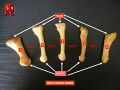 Metatarsus


Advertise on WikiMD — 81,000+ full articles, ~900,000 total pages, ~250 million page views. Global reach, limited time promotional rates from $1/page/day. Learn more · View stats


Translate page: - East Asian
中文,
日本,
한국어,
South Asian
हिन्दी,
தமிழ்,
తెలుగు,
Urdu,
ಕನ್ನಡ,
Southeast Asian
Indonesian,
Vietnamese,
Thai,
မြန်မာဘာသာ,
বাংলা
European
español,
Deutsch,
français,
Greek,
português do Brasil,
polski,
română,
русский,
Nederlands,
norsk,
svenska,
suomi,
Italian
Middle Eastern & African
عربى,
Turkish,
Persian,
Hebrew,
Afrikaans,
isiZulu,
Kiswahili,
Other
Bulgarian,
Hungarian,
Czech,
Swedish,
മലയാളം,
मराठी,
ਪੰਜਾਬੀ,
ગુજરાતી,
Portuguese,
Ukrainian
About WikiMD • Contact • Disclaimer • Privacy • Copyright • Site statistics
Some content and images may originate from Wikimedia Commons or Wikipedia and remain subject to their stated licenses. Unless otherwise noted, eligible WikiMD content is available under CC BY-SA 4.0.
WikiMD Wellnesspedia — Free health & wellness information for patients, students, and health professionals.

