Savoy
Savoy (Savoie in French) is a cultural and historical region in the Western Alps, located primarily in what is now the Savoie and Haute-Savoie departments of France. Historically, it was part of the Kingdom of Sardinia until its annexation by France in 1860 following the Treaty of Turin. The region is known for its stunning alpine landscapes, ski resorts, and culinary traditions, including the famous cheeses like Beaufort and Tomme de Savoie.
History[edit]
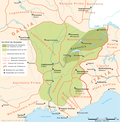
The history of Savoy is marked by its strategic position in the Alps. It was inhabited by the Allobroges, an ancient Gaulish tribe, before being conquered by the Roman Empire. After the fall of Rome, the region saw a succession of rulers, including the Burgundians and Franks. In the 11th century, the House of Savoy emerged as the dominant force, expanding its territory across what is now Italy, Switzerland, and France. The Duchy of Savoy became a significant European power, navigating alliances and conflicts with neighboring countries.
In the 19th century, Savoy played a crucial role in the unification of Italy. The region was ceded to France as part of the Treaty of Turin, a move that was confirmed by a plebiscite. This transfer significantly altered the region's cultural and political landscape, integrating it into the French state.
Geography[edit]
Savoy is characterized by its diverse geography, ranging from the high peaks of the Mont Blanc massif to the serene waters of Lake Annecy. The region is a popular destination for outdoor activities, including skiing, hiking, and mountaineering. The Vanoise National Park, France's first national park, is a significant conservation area, protecting the alpine flora and fauna.
Culture[edit]
The culture of Savoy is a blend of French and Italian influences, reflecting its historical ties to both countries. The Savoyard dialect, a form of Franco-Provençal, is still spoken by some residents. The region's cuisine is renowned for its rich flavors, with dishes like fondue, tartiflette, and raclette gaining international fame. Savoy is also celebrated for its vineyards, producing wines such as Roussette de Savoie and Crépy.
Economy[edit]
The economy of Savoy is heavily influenced by tourism, with its ski resorts, such as Chamonix and Courchevel, attracting visitors from around the world. Agriculture, particularly dairy farming and cheese production, plays a significant role in the rural areas. The region is also home to several industrial enterprises, including those in the energy sector, capitalizing on its hydroelectric potential.
Modern Savoy[edit]
Today, Savoy is a vibrant region that balances its rich history with modern development. It remains a key tourist destination, offering a unique blend of natural beauty, cultural heritage, and recreational activities. The region's integration into France has been successful, yet it retains a distinct identity that continues to fascinate and attract people from across the globe.

-
 Savoy
Savoy -
 Savoy
Savoy -
 Savoy
Savoy -
 Savoy
Savoy -
 Savoy
Savoy -
Savoy
-
Savoy
-
Savoy
-
Savoy


Ad. Transform your life with W8MD's
GLP-1 weight loss injections special from $29.99 with insurance
|
WikiMD Medical Encyclopedia |
Medical Disclaimer: WikiMD is for informational purposes only and is not a substitute for professional medical advice. Content may be inaccurate or outdated and should not be used for diagnosis or treatment. Always consult your healthcare provider for medical decisions. Verify information with trusted sources such as CDC.gov and NIH.gov. By using this site, you agree that WikiMD is not liable for any outcomes related to its content. See full disclaimer.
Credits:Most images are courtesy of Wikimedia commons, and templates, categories Wikipedia, licensed under CC BY SA or similar.
Translate this page: - East Asian
中文,
日本,
한국어,
South Asian
हिन्दी,
தமிழ்,
తెలుగు,
Urdu,
ಕನ್ನಡ,
Southeast Asian
Indonesian,
Vietnamese,
Thai,
မြန်မာဘာသာ,
বাংলা
European
español,
Deutsch,
français,
Greek,
português do Brasil,
polski,
română,
русский,
Nederlands,
norsk,
svenska,
suomi,
Italian
Middle Eastern & African
عربى,
Turkish,
Persian,
Hebrew,
Afrikaans,
isiZulu,
Kiswahili,
Other
Bulgarian,
Hungarian,
Czech,
Swedish,
മലയാളം,
मराठी,
ਪੰਜਾਬੀ,
ગુજરાતી,
Portuguese,
Ukrainian

.JPG)


