Roadkill cuisine
Roadkill cuisine is the practice of preparing and consuming animals that have been hit by vehicles and left on the road. This practice is seen in various cultures around the world, and the types of animals consumed can range from small creatures like squirrels and rabbits to larger game such as deer or moose.
History[edit]
The practice of consuming roadkill is not new and can be traced back to times when hunting was a primary source of food. In many cultures, it was considered wasteful to leave any edible animal uneaten. The advent of motor vehicles has simply added a new dimension to this age-old practice.
Legal Status[edit]
The legal status of roadkill cuisine varies from place to place. In some jurisdictions, it is illegal to take roadkill home for consumption, while in others, it is perfectly legal. Some states in the U.S., such as Montana, have laws specifically allowing the collection and consumption of roadkill.
Preparation and Safety[edit]
The preparation of roadkill for consumption is similar to that of any other meat. However, there are additional safety considerations due to the manner in which the animal died. It is important to ensure that the animal is fresh and has not begun to decompose. In addition, the animal should be thoroughly cooked to kill any potential pathogens.
Cultural Significance[edit]
Roadkill cuisine has cultural significance in many parts of the world. In the southern United States, for example, it is often associated with rural, working-class culture. In the United Kingdom, the practice has been championed by the likes of celebrity chef Fergus Henderson, who advocates for the use of every part of an animal in cooking.
See Also[edit]

Roadkill_cuisine[edit]
-
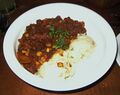 Kentucky burgoo
 -
 Dead Opossum
 -
 Kangaroo Sign at Stuart Highway
 -
 Moose crossing a road
 -
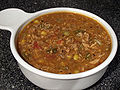 Brunswick stew
 -
 Norwegian Red Fox - Killed on the road
 -
 Roadkill cafe


Medical Disclaimer: WikiMD is for informational purposes only and is not a substitute for professional medical advice. Content may be inaccurate or outdated and should not be used for diagnosis or treatment. Always consult your healthcare provider for medical decisions. Verify information with trusted sources such as CDC.gov and NIH.gov. By using this site, you agree that WikiMD is not liable for any outcomes related to its content. See full disclaimer.
Credits:Most images are courtesy of Wikimedia commons, and templates, categories Wikipedia, licensed under CC BY SA or similar.
Translate page: - East Asian
中文,
日本,
한국어,
South Asian
हिन्दी,
தமிழ்,
తెలుగు,
Urdu,
ಕನ್ನಡ,
Southeast Asian
Indonesian,
Vietnamese,
Thai,
မြန်မာဘာသာ,
বাংলা
European
español,
Deutsch,
français,
Greek,
português do Brasil,
polski,
română,
русский,
Nederlands,
norsk,
svenska,
suomi,
Italian
Middle Eastern & African
عربى,
Turkish,
Persian,
Hebrew,
Afrikaans,
isiZulu,
Kiswahili,
Other
Bulgarian,
Hungarian,
Czech,
Swedish,
മലയാളം,
मराठी,
ਪੰਜਾਬੀ,
ગુજરાતી,
Portuguese,
Ukrainian

