Risk management
Risk management is the identification, evaluation, and prioritization of risks (defined in ISO 31000 as the effect of uncertainty on objectives) followed by coordinated and economical application of resources to minimize, monitor, and control the probability or impact of unfortunate events or to maximize the realization of opportunities.
Definition[edit]
A widely used vocabulary for risk management is defined by ISO Guide 73:2009, "Risk management. Vocabulary." In ideal risk management, a prioritization process is followed whereby the risks with the greatest loss (or impact) and the greatest probability of occurring are handled first, and risks with lower probability of occurrence and lower loss are handled in descending order. In practice the process of assessing overall risk can be difficult, and balancing resources used to mitigate between risks with a high probability of occurrence but lower loss versus a risk with high loss but lower probability of occurrence can often be mishandled.
Method[edit]
For the most part, these methods consist of the following elements, performed, more or less, in the following order.
- Identify, characterize threats
- Assess the vulnerability of critical assets to specific threats
- Determine the risk (i.e. the expected likelihood and consequences of specific types of attacks on specific assets)
- Identify ways to reduce those risks
- Prioritize risk reduction measures based on a strategy
Principles of risk management[edit]
The International Organization for Standardization (ISO) identifies the following principles of risk management:
- Risk management should create value.
- Risk management should be an integral part of organizational processes.
- Risk management should be part of decision making.
- Risk management should explicitly address uncertainty.
- Risk management should be systematic and structured.
- Risk management should be based on the best available information.
- Risk management should be tailored.
- Risk management should take into account human factors.
- Risk management should be transparent and inclusive.
- Risk management should be dynamic, iterative and responsive to change.
- Risk management should be capable of continual improvement and enhancement.
See also[edit]
- Enterprise risk management
- Financial risk management
- ISO 31000
- Risk assessment
- Risk Management Plan
- Risk management tools

This WikiMD article can only be edited by registered and verified editors. You can log in or register.
Risk management[edit]
-
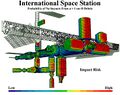 ISS impact risk
 -
 Risk in Banking


Sponsored Health Resource

W8MD Weight Loss, Sleep & MedSpa
Looking for physician-supervised weight loss, semaglutide, tirzepatide, or GLP-1 receptor agonist options? W8MD helps eligible patients in New York City, Brooklyn, New Jersey, Connecticut, Pennsylvania, Delaware, and greater Philadelphia with medical weight loss, sleep medicine, and long-term maintenance support.
GLP-1 specials: Affordable GLP-1 injections NYC and Philadelphia starting from $29.99/week and up for semaglutide with insurance accepted for qualifying visits, and $45/week and up for tirzepatide with insurance accepted for qualifying visits. Self-pay options start from $59.99/week and up for semaglutide and $69.99/week and up for tirzepatide.
Medical weight loss NYC | Affordable GLP-1 injections NYC | Budget GLP-1 weight loss shots Philadelphia | New Jersey medical weight loss | NYC medical weight loss | Philadelphia medical weight loss | Sleep clinic NYC | W8MD's Philadelphia GLP-1 doctor | Weight loss prescriptions NYC
Book a W8MD appointment · View GLP-1 specials
Paid promotional message. Eligibility, pricing, insurance coverage, medication availability, and results vary. Medical evaluation required.

Medical Disclaimer: WikiMD is for informational purposes only and is not a substitute for professional medical advice. Content may be inaccurate or outdated and should not be used for diagnosis or treatment. Always consult your healthcare provider for medical decisions. Verify information with trusted sources such as CDC.gov and NIH.gov. By using this site, you agree that WikiMD is not liable for any outcomes related to its content. See full disclaimer.
Credits:Most images are courtesy of Wikimedia commons, and templates, categories Wikipedia, licensed under CC BY SA or similar.
Translate page: - East Asian
中文,
日本,
한국어,
South Asian
हिन्दी,
தமிழ்,
తెలుగు,
Urdu,
ಕನ್ನಡ,
Southeast Asian
Indonesian,
Vietnamese,
Thai,
မြန်မာဘာသာ,
বাংলা
European
español,
Deutsch,
français,
Greek,
português do Brasil,
polski,
română,
русский,
Nederlands,
norsk,
svenska,
suomi,
Italian
Middle Eastern & African
عربى,
Turkish,
Persian,
Hebrew,
Afrikaans,
isiZulu,
Kiswahili,
Other
Bulgarian,
Hungarian,
Czech,
Swedish,
മലയാളം,
मराठी,
ਪੰਜਾਬੀ,
ગુજરાતી,
Portuguese,
Ukrainian

