Regional cuisines of medieval Europe
Regional Cuisines of Medieval Europe refers to the diverse food habits, cooking methods, and ingredients used across different regions of Europe during the Middle Ages. The period, spanning from the 5th to the 15th century, witnessed significant changes in dietary habits, largely influenced by social, religious, and political factors.
Overview[edit]
During the Middle Ages, the diet of Europeans varied greatly depending on region, season, and social status. The majority of the population, particularly the peasantry, subsisted on a diet of bread, porridge, and vegetables. Meat was a luxury, often reserved for the nobility and the wealthy. However, the regional cuisines of medieval Europe were far more diverse and complex than this general overview suggests.
Regional Variations[edit]
Northern Europe[edit]
In Northern Europe, the diet was heavily influenced by the cold climate and the long winters. The consumption of preserved foods, such as salted fish and smoked meats, was common. Rye was the primary grain used for bread.
Southern Europe[edit]
In contrast, the cuisine of Southern Europe was characterized by a greater use of fresh fruits, vegetables, and herbs, largely due to the region's warmer climate. Olive oil was a staple, and wheat was the primary grain.
Eastern Europe[edit]
Eastern Europe's cuisine was influenced by both its colder climate and its proximity to Asia. The diet included a lot of dairy products, fermented foods, and grains like millet and buckwheat.
Influence of the Church[edit]
The Catholic Church played a significant role in shaping the dietary habits of medieval Europe. The Church's fasting rules, which prohibited the consumption of meat on certain days, led to the increased use of fish and vegetarian ingredients.
Conclusion[edit]
The regional cuisines of medieval Europe were diverse and complex, reflecting the social, religious, and environmental factors of the time. They laid the foundation for many of the culinary traditions that continue to define European cuisine today.
This article is a European history–related stub. You can help WikiMD by expanding it!

-
 Hortus Deliciarum 1190
 -
 Bayeux Tapestry scene 43 banquet
 -
 29-autunno, Taccuino Sanitatis, Casanatense 4182
 -
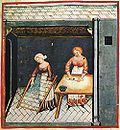 6-alimenti, pasta, Taccuino Sanitatis, Casanatense 4182
 -
 Fabrication du verjus BnF Latin 9333 fol. 83


Ad. Transform your health with W8MD Weight Loss, Sleep & MedSpa

Tired of being overweight?
Special offer:
Budget GLP-1 weight loss medications
- Semaglutide starting from $29.99/week and up with insurance for visit of $59.99 and up per week self pay.
- Tirzepatide starting from $45.00/week and up (dose dependent) or $69.99/week and up self pay
✔ Same-week appointments, evenings & weekends
Learn more:
- GLP-1 weight loss clinic NYC
- W8MD's NYC medical weight loss
- W8MD Philadelphia GLP-1 shots
- Philadelphia GLP-1 injections
- Affordable GLP-1 shots NYC
|
WikiMD Medical Encyclopedia |
Medical Disclaimer: WikiMD is for informational purposes only and is not a substitute for professional medical advice. Content may be inaccurate or outdated and should not be used for diagnosis or treatment. Always consult your healthcare provider for medical decisions. Verify information with trusted sources such as CDC.gov and NIH.gov. By using this site, you agree that WikiMD is not liable for any outcomes related to its content. See full disclaimer.
Credits:Most images are courtesy of Wikimedia commons, and templates, categories Wikipedia, licensed under CC BY SA or similar.
Translate this page: - East Asian
中文,
日本,
한국어,
South Asian
हिन्दी,
தமிழ்,
తెలుగు,
Urdu,
ಕನ್ನಡ,
Southeast Asian
Indonesian,
Vietnamese,
Thai,
မြန်မာဘာသာ,
বাংলা
European
español,
Deutsch,
français,
Greek,
português do Brasil,
polski,
română,
русский,
Nederlands,
norsk,
svenska,
suomi,
Italian
Middle Eastern & African
عربى,
Turkish,
Persian,
Hebrew,
Afrikaans,
isiZulu,
Kiswahili,
Other
Bulgarian,
Hungarian,
Czech,
Swedish,
മലയാളം,
मराठी,
ਪੰਜਾਬੀ,
ગુજરાતી,
Portuguese,
Ukrainian
