Red cabbage
Red Cabbage (Brassica oleracea var. capitata f. rubra) is a type of cabbage that is purple or red in color. It is a member of the Brassicaceae family, which also includes broccoli, Brussels sprouts, and kale.
Description[edit]
Red cabbage is a biennial plant that is typically grown as an annual vegetable crop for its dense-leaved heads. The plant is characterized by its red or purple leaves, which are often used in salads and coleslaw. The color of the leaves can vary depending on the pH level of the soil in which the plant is grown. In acidic soils, the leaves will appear more red, while in neutral soils, they will be purple.
Cultivation[edit]
Red cabbage is a cool-season crop that prefers a well-drained, fertile soil with a pH between 6.0 and 7.0. It is typically direct-seeded or transplanted in early spring or late summer. The plant requires consistent moisture and regular fertilization to produce large, dense heads.
Nutritional Value[edit]
Red cabbage is known for its high nutritional value. It is rich in vitamin C, vitamin K, and fiber. It also contains significant amounts of anthocyanins, a type of flavonoid that gives the cabbage its red color and has been linked to a variety of health benefits, including reduced risk of heart disease and improved cognitive function.
Culinary Uses[edit]
In addition to being consumed raw in salads and coleslaw, red cabbage can be cooked in a variety of ways. It is often braised or roasted and served as a side dish. It can also be pickled or fermented to make sauerkraut. In many cultures, red cabbage is a traditional ingredient in holiday dishes.
See Also[edit]

-
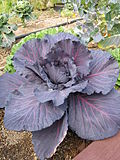 Brassica oleracea var capitata Rubyball
 -
 Field with red cabbages
 -
 Purple cabbage
 -
 Red cabbage with horizontal cut through its growth axis
 -
 Extract of red cabbage in the beaker (pH indicator)
 -
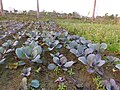 Red cabbage
 -
 Red cabbage (Brassica oleracea convar)


.jpg)

.JPG)
Ad. Transform your life with W8MD's
GLP-1 weight loss injections special from $29.99 with insurance
|
WikiMD Medical Encyclopedia |
Medical Disclaimer: WikiMD is for informational purposes only and is not a substitute for professional medical advice. Content may be inaccurate or outdated and should not be used for diagnosis or treatment. Always consult your healthcare provider for medical decisions. Verify information with trusted sources such as CDC.gov and NIH.gov. By using this site, you agree that WikiMD is not liable for any outcomes related to its content. See full disclaimer.
Credits:Most images are courtesy of Wikimedia commons, and templates, categories Wikipedia, licensed under CC BY SA or similar.
Translate this page: - East Asian
中文,
日本,
한국어,
South Asian
हिन्दी,
தமிழ்,
తెలుగు,
Urdu,
ಕನ್ನಡ,
Southeast Asian
Indonesian,
Vietnamese,
Thai,
မြန်မာဘာသာ,
বাংলা
European
español,
Deutsch,
français,
Greek,
português do Brasil,
polski,
română,
русский,
Nederlands,
norsk,
svenska,
suomi,
Italian
Middle Eastern & African
عربى,
Turkish,
Persian,
Hebrew,
Afrikaans,
isiZulu,
Kiswahili,
Other
Bulgarian,
Hungarian,
Czech,
Swedish,
മലയാളം,
मराठी,
ਪੰਜਾਬੀ,
ગુજરાતી,
Portuguese,
Ukrainian
