Rectal administration
Rectal administration is a route of administration where medications are inserted into the rectum. This method is often used when a patient has difficulty swallowing, is vomiting, or the drug needs to be delivered directly to the lower gastrointestinal tract.
Overview[edit]
Rectal administration can be used for both systemic and local effects. Systemic effects involve the drug being absorbed into the bloodstream and distributed throughout the body. Local effects are limited to the area of the rectum and colon, where the drug can treat conditions such as hemorrhoids, anal fissures, and local infections.
Advantages[edit]
The rectal route has several advantages over other routes of administration. It bypasses the first pass effect, which can lead to a higher bioavailability of the drug. It is also useful for patients who are unable to swallow or are nauseous. Additionally, it can be used for drugs that are destroyed by stomach acid.
Disadvantages[edit]
Despite its advantages, rectal administration also has several disadvantages. It can be uncomfortable and embarrassing for some patients. The absorption of the drug can be unpredictable and variable. There is also a risk of damage to the rectal tissue if the drug is not administered properly.
Drugs Administered Rectally[edit]
Several types of drugs can be administered rectally. These include antiemetics, analgesics, antipyretics, antibiotics, and sedatives. The form of the drug can vary, with suppositories and enemas being the most common.
Procedure[edit]
The procedure for rectal administration involves the patient lying on their side with their upper leg drawn towards their chest. The medication is then inserted into the rectum, usually with a lubricated finger or applicator. The patient should remain in this position for at least a few minutes to allow the medication to be absorbed.
See Also[edit]
- Oral administration
- Intravenous administration
- Subcutaneous administration
- Intramuscular administration

This WikiMD article can only be edited by registered and verified editors. You can log in or register.
Rectal_administration[edit]
-
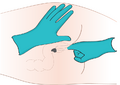 Administering medication rectally
 -
 Enema nozzle insertion into rectum
 -
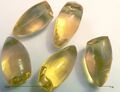 Glycerin suppositories
 -
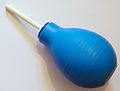 Rectal bulb syringe
 -
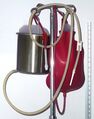 Soapsuds enemas


Medical Disclaimer: WikiMD is for informational purposes only and is not a substitute for professional medical advice. Content may be inaccurate or outdated and should not be used for diagnosis or treatment. Always consult your healthcare provider for medical decisions. Verify information with trusted sources such as CDC.gov and NIH.gov. By using this site, you agree that WikiMD is not liable for any outcomes related to its content. See full disclaimer.
Credits:Most images are courtesy of Wikimedia commons, and templates, categories Wikipedia, licensed under CC BY SA or similar.
Translate page: - East Asian
中文,
日本,
한국어,
South Asian
हिन्दी,
தமிழ்,
తెలుగు,
Urdu,
ಕನ್ನಡ,
Southeast Asian
Indonesian,
Vietnamese,
Thai,
မြန်မာဘာသာ,
বাংলা
European
español,
Deutsch,
français,
Greek,
português do Brasil,
polski,
română,
русский,
Nederlands,
norsk,
svenska,
suomi,
Italian
Middle Eastern & African
عربى,
Turkish,
Persian,
Hebrew,
Afrikaans,
isiZulu,
Kiswahili,
Other
Bulgarian,
Hungarian,
Czech,
Swedish,
മലയാളം,
मराठी,
ਪੰਜਾਬੀ,
ગુજરાતી,
Portuguese,
Ukrainian

