Raymond Cattell
Raymond Cattell (20 March 1905 – 2 February 1998) was a British and American psychologist who is best known for his psychometric research into intrapersonal psychological structure. His work also explored the basic dimensions of personality and temperament, the range of cognitive abilities, the dynamic dimensions of motivation and emotion, and the functional dimensions of behavior. Cattell's research was guided by the scientific method and he was a pioneer in the field of personality psychology.
Early life and education[edit]
Raymond Cattell was born on 20 March 1905 in Hill Top, West Bromwich, a small town in England. He was the second of four children. His father, Raymond George Cattell, was a mechanical engineer and his mother, Elizabeth Alice Cattell, was a housewife.
Cattell received his education at the University of London, where he studied chemistry and physics. He later shifted his focus to psychology and earned his Ph.D. in psychology from the same university in 1929.
Career[edit]
Cattell moved to the United States in 1937 and began teaching at Clark University. He later taught at Harvard University and the University of Illinois.
Cattell's research focused on personality, abilities, motivation, and behavior. He developed a number of psychological tests, including the 16 Personality Factors questionnaire and the Culture Fair Intelligence Test. These tests are still widely used in psychology today.
Contributions to psychology[edit]
Cattell made significant contributions to the field of psychology. He developed the theory of Fluid and Crystallized Intelligence, which suggests that intelligence is composed of different abilities that interact with each other.
Cattell also proposed the 16 Personality Factors model, which suggests that human personality can be broken down into 16 traits. This model has been influential in the field of personality psychology.
Later life and death[edit]
Cattell retired from the University of Illinois in 1973. He continued to write and conduct research until his death on 2 February 1998.
Legacy[edit]
Cattell's work has had a lasting impact on the field of psychology. His theories and tests have been used in a variety of settings, including clinical psychology, educational psychology, and organizational psychology.
See also[edit]
References[edit]
 | This psychology-related article is a stub. You can help WikiMD by expanding the page. |
-
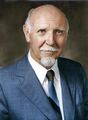 Raymond Cattell

Advertise on WikiMD — 81,000+ full articles, ~900,000 total pages, ~250 million page views. Global reach, limited time promotional rates from $1/page/day. Learn more · View stats


Translate page: - East Asian
中文,
日本,
한국어,
South Asian
हिन्दी,
தமிழ்,
తెలుగు,
Urdu,
ಕನ್ನಡ,
Southeast Asian
Indonesian,
Vietnamese,
Thai,
မြန်မာဘာသာ,
বাংলা
European
español,
Deutsch,
français,
Greek,
português do Brasil,
polski,
română,
русский,
Nederlands,
norsk,
svenska,
suomi,
Italian
Middle Eastern & African
عربى,
Turkish,
Persian,
Hebrew,
Afrikaans,
isiZulu,
Kiswahili,
Other
Bulgarian,
Hungarian,
Czech,
Swedish,
മലയാളം,
मराठी,
ਪੰਜਾਬੀ,
ગુજરાતી,
Portuguese,
Ukrainian
About WikiMD • Contact • Disclaimer • Privacy • Copyright • Site statistics
Some content and images may originate from Wikimedia Commons or Wikipedia and remain subject to their stated licenses. Unless otherwise noted, eligible WikiMD content is available under CC BY-SA 4.0.
WikiMD Wellnesspedia — Free health & wellness information for patients, students, and health professionals.

