Radiosurgery
Radiosurgery is a medical procedure that uses radiation to treat small, well-defined areas of the body. It is often used to treat tumors and other abnormalities in the brain. Despite its name, radiosurgery is a non-invasive procedure and does not involve any surgical incisions.
History[edit]
The concept of radiosurgery was first proposed by Swedish neurosurgeon Lars Leksell in 1951. The first radiosurgery procedure was performed in 1967 using the Gamma Knife, a device invented by Leksell specifically for this purpose.
Procedure[edit]
Radiosurgery works by directing highly focused beams of radiation at the target area. The radiation damages the DNA of the cells in the target area, causing them to die or stop growing. Because the radiation is so precisely targeted, it minimally affects the surrounding healthy tissue.
Types[edit]
There are several types of radiosurgery, including stereotactic radiosurgery (SRS), fractionated stereotactic radiotherapy (FSRT), and proton therapy. The type of radiosurgery used depends on the size, location, and type of the abnormality being treated.
Uses[edit]
Radiosurgery is used to treat a variety of conditions, including brain tumors, arteriovenous malformations (AVMs), acoustic neuromas, pituitary tumors, and trigeminal neuralgia. It can also be used to treat certain types of cancer, including lung cancer, liver cancer, and prostate cancer.
Risks[edit]
While radiosurgery is generally safe, it does carry some risks. These can include hair loss, nausea, headache, and fatigue. In rare cases, it can also cause more serious complications, such as stroke or brain damage.
See also[edit]

This WikiMD article can only be edited by registered and verified editors. You can log in or register.
-
 Intraoperative photograph showing a radiosurgery system
 -
 Acoustic schwannoma gamma knife
 -
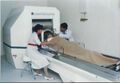 Dr. B. K. Misra performing Stereotactic Gamma Radiosurgery
 -
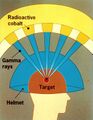 Gamma Knife Graphic


Medical Disclaimer: WikiMD is for informational purposes only and is not a substitute for professional medical advice. Content may be inaccurate or outdated and should not be used for diagnosis or treatment. Always consult your healthcare provider for medical decisions. Verify information with trusted sources such as CDC.gov and NIH.gov. By using this site, you agree that WikiMD is not liable for any outcomes related to its content. See full disclaimer.
Credits:Most images are courtesy of Wikimedia commons, and templates, categories Wikipedia, licensed under CC BY SA or similar.
Translate page: - East Asian
中文,
日本,
한국어,
South Asian
हिन्दी,
தமிழ்,
తెలుగు,
Urdu,
ಕನ್ನಡ,
Southeast Asian
Indonesian,
Vietnamese,
Thai,
မြန်မာဘာသာ,
বাংলা
European
español,
Deutsch,
français,
Greek,
português do Brasil,
polski,
română,
русский,
Nederlands,
norsk,
svenska,
suomi,
Italian
Middle Eastern & African
عربى,
Turkish,
Persian,
Hebrew,
Afrikaans,
isiZulu,
Kiswahili,
Other
Bulgarian,
Hungarian,
Czech,
Swedish,
മലയാളം,
मराठी,
ਪੰਜਾਬੀ,
ગુજરાતી,
Portuguese,
Ukrainian

