Pseudoruminant
Pseudoruminants are a group of herbivorous mammals that have a complex stomach designed to ferment plant material, but unlike true ruminants, they do not have a four-chambered stomach. This group includes species such as the camel, llama, alpaca, and guanaco, which are part of the camelid family. Pseudoruminants are adapted to environments where water is scarce and have evolved unique physiological traits to survive in such conditions.
Digestive System[edit]
The digestive system of pseudoruminants is specialized for processing coarse and fibrous plant material. While they do not have the four distinct stomach compartments found in true ruminants (the rumen, reticulum, omasum, and abomasum), pseudoruminants possess a three-chambered stomach. The chambers are known as the C1, C2, and C3, with the C1 and C2 chambers serving a similar function to the rumen and reticulum in true ruminants, allowing for microbial fermentation of plant material. The C3 chamber is analogous to the true stomach (abomasum) in ruminants, where enzymatic digestion takes place.
Adaptations[edit]
Pseudoruminants have developed several adaptations that allow them to thrive in arid and semi-arid environments. One of the most notable adaptations is their ability to conserve water. They produce highly concentrated urine and dry feces, significantly reducing water loss. Additionally, their unique blood cells can withstand high osmotic variation without rupturing, which is crucial for surviving in environments where water intake can be highly variable.
Another significant adaptation is their efficient thermoregulation. Pseudoruminants can tolerate high body temperatures, allowing them to conserve water by not sweating as much. Their thick fur and specialized nasal passages also aid in temperature regulation.
Ecological Role[edit]
Pseudoruminants play a crucial role in their ecosystems by acting as primary consumers. They help in the dispersal of seeds through their feces and contribute to the control of vegetation, which can prevent overgrazing and promote biodiversity. Their ability to feed on coarse plant materials that are indigestible to many other herbivores allows them to occupy a unique niche in their habitats.
Conservation[edit]
Some species of pseudoruminants, particularly those in the camelid family, are of economic importance to humans for their wool, meat, and as beasts of burden. However, habitat destruction, climate change, and overexploitation have led to a decline in some pseudoruminant populations. Conservation efforts are essential to ensure the survival of these unique animals and the ecosystems they support.
 | This zoology–related article is a stub. You can help WikiMD by expanding the page. |
-
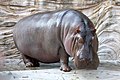 Hippopotamus
 -
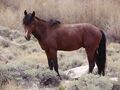 Wild horse in Trail Canyon, Nevada
 -
 Indian rhinoceros
 -
 Pseudoruminant


_4.jpg)


Medical Disclaimer: WikiMD is for informational purposes only and is not a substitute for professional medical advice. Content may be inaccurate or outdated and should not be used for diagnosis or treatment. Always consult your healthcare provider for medical decisions. Verify information with trusted sources such as CDC.gov and NIH.gov. By using this site, you agree that WikiMD is not liable for any outcomes related to its content. See full disclaimer.
Credits:Most images are courtesy of Wikimedia commons, and templates, categories Wikipedia, licensed under CC BY SA or similar.
Translate page: - East Asian
中文,
日本,
한국어,
South Asian
हिन्दी,
தமிழ்,
తెలుగు,
Urdu,
ಕನ್ನಡ,
Southeast Asian
Indonesian,
Vietnamese,
Thai,
မြန်မာဘာသာ,
বাংলা
European
español,
Deutsch,
français,
Greek,
português do Brasil,
polski,
română,
русский,
Nederlands,
norsk,
svenska,
suomi,
Italian
Middle Eastern & African
عربى,
Turkish,
Persian,
Hebrew,
Afrikaans,
isiZulu,
Kiswahili,
Other
Bulgarian,
Hungarian,
Czech,
Swedish,
മലയാളം,
मराठी,
ਪੰਜਾਬੀ,
ગુજરાતી,
Portuguese,
Ukrainian

