Propionyl-CoA carboxylase
Propionyl-CoA Carboxylase (PCC) is a biotin-dependent enzyme involved in the metabolism of fatty acids, amino acids, and cholesterol. It plays a critical role in the catabolic pathway of Propionyl-CoA, converting it into Methylmalonyl-CoA through a carboxylation reaction. This process is essential for the degradation of certain amino acids, odd-chain fatty acids, and cholesterol, making PCC crucial for energy production, especially during fasting states.
Function[edit]
Propionyl-CoA Carboxylase catalyzes the carboxylation of Propionyl-CoA to Methylmalonyl-CoA, a key step in the metabolic pathway that converts odd-chain fatty acids and certain amino acids into succinyl-CoA, which can then enter the Citric Acid Cycle (Krebs Cycle) for energy production. The enzyme requires Biotin, a B-vitamin, as a coenzyme, and Magnesium or Manganese ions as cofactors for its activity.
Structure[edit]
The enzyme is a heterodimer composed of alpha and beta subunits, which are encoded by the PCCA and PCCB genes, respectively. The active form of PCC is typically a dodecamer, consisting of six alpha-beta subunit pairs. The biotin molecule is attached to the alpha subunit and plays a pivotal role in the carboxylation reaction.
Genetic and Biochemical Aspects[edit]
Mutations in the PCCA or PCCB genes can lead to a metabolic disorder known as Propionic Acidemia, characterized by an accumulation of propionic acid in the blood. This condition can lead to severe metabolic acidosis, developmental delay, and, in some cases, life-threatening illness. Diagnosis often involves genetic testing and biochemical assays to measure the activity of PCC in fibroblasts or other tissues.
Clinical Significance[edit]
Propionyl-CoA Carboxylase deficiency, or Propionic Acidemia, is a significant concern in newborns and infants, where it can present with vomiting, poor feeding, lethargy, and hypotonia. Early detection and management are crucial to prevent severe metabolic crises. Treatment typically involves dietary management to limit the intake of amino acids that are precursors to propionyl-CoA, as well as carnitine supplementation to facilitate the removal of excess propionyl-CoA.
Research Directions[edit]
Ongoing research aims to better understand the molecular mechanisms underlying Propionic Acidemia and to develop more effective treatments. Gene therapy and enzyme replacement therapy are among the approaches being explored to address the underlying genetic defects and improve enzyme activity in affected individuals.
 | This medical article is a stub. You can help WikiMD by expanding the page. |
Propionyl-CoA_carboxylase[edit]
-
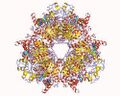 6ybp
6ybp -
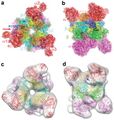 Nihms213291f1
 -
 Nihms213291f3
 -
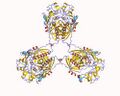 6ybpa
6ybpa -
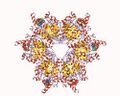 6ybpb
6ybpb


Medical Disclaimer: WikiMD is for informational purposes only and is not a substitute for professional medical advice. Content may be inaccurate or outdated and should not be used for diagnosis or treatment. Always consult your healthcare provider for medical decisions. Verify information with trusted sources such as CDC.gov and NIH.gov. By using this site, you agree that WikiMD is not liable for any outcomes related to its content. See full disclaimer.
Credits:Most images are courtesy of Wikimedia commons, and templates, categories Wikipedia, licensed under CC BY SA or similar.
Translate page: - East Asian
中文,
日本,
한국어,
South Asian
हिन्दी,
தமிழ்,
తెలుగు,
Urdu,
ಕನ್ನಡ,
Southeast Asian
Indonesian,
Vietnamese,
Thai,
မြန်မာဘာသာ,
বাংলা
European
español,
Deutsch,
français,
Greek,
português do Brasil,
polski,
română,
русский,
Nederlands,
norsk,
svenska,
suomi,
Italian
Middle Eastern & African
عربى,
Turkish,
Persian,
Hebrew,
Afrikaans,
isiZulu,
Kiswahili,
Other
Bulgarian,
Hungarian,
Czech,
Swedish,
മലയാളം,
मराठी,
ਪੰਜਾਬੀ,
ગુજરાતી,
Portuguese,
Ukrainian

