Primordium
Primordium is a biological term that refers to an organ or tissue in its earliest recognizable stage of development. Cells of the primordium are called stem cells, and they are characterized by their ability to differentiate into a variety of different cell types.
Development[edit]
The development of a primordium into a mature organ or tissue involves a process known as morphogenesis. This process is regulated by a variety of genes and proteins, which control the growth and differentiation of cells in the primordium.
Types of Primordia[edit]
There are several types of primordia, including:
- Leaf primordium: This is the earliest stage in the development of a leaf. It is a small, cone-shaped structure that emerges from the apical meristem, the growth point at the tip of a plant stem.
- Flower primordium: This is the earliest stage in the development of a flower. It is a small bud that emerges from the inflorescence meristem, the growth point where flowers are produced.
- Root primordium: This is the earliest stage in the development of a root. It is a small, round structure that emerges from the root apical meristem, the growth point at the tip of a root.
Role in Plant Development[edit]
In plants, primordia play a crucial role in the process of organogenesis, the formation of new organs. The development of primordia is regulated by a variety of plant hormones, including auxin, cytokinin, and gibberellin.
Role in Animal Development[edit]
In animals, primordia are involved in the development of various organs and tissues, including the nervous system, muscular system, and circulatory system. The development of these primordia is regulated by a variety of growth factors, including fibroblast growth factor, transforming growth factor beta, and vascular endothelial growth factor.
See Also[edit]

Primordium[edit]
-
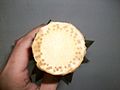 Root primordia
 -
Primordia
-
Third leaf
-
Generative spiral
-
Leaf migration

Ad. Transform your life with W8MD's
GLP-1 weight loss injections special from $29.99 with insurance
|
WikiMD Medical Encyclopedia |
Medical Disclaimer: WikiMD is for informational purposes only and is not a substitute for professional medical advice. Content may be inaccurate or outdated and should not be used for diagnosis or treatment. Always consult your healthcare provider for medical decisions. Verify information with trusted sources such as CDC.gov and NIH.gov. By using this site, you agree that WikiMD is not liable for any outcomes related to its content. See full disclaimer.
Credits:Most images are courtesy of Wikimedia commons, and templates, categories Wikipedia, licensed under CC BY SA or similar.
Translate this page: - East Asian
中文,
日本,
한국어,
South Asian
हिन्दी,
தமிழ்,
తెలుగు,
Urdu,
ಕನ್ನಡ,
Southeast Asian
Indonesian,
Vietnamese,
Thai,
မြန်မာဘာသာ,
বাংলা
European
español,
Deutsch,
français,
Greek,
português do Brasil,
polski,
română,
русский,
Nederlands,
norsk,
svenska,
suomi,
Italian
Middle Eastern & African
عربى,
Turkish,
Persian,
Hebrew,
Afrikaans,
isiZulu,
Kiswahili,
Other
Bulgarian,
Hungarian,
Czech,
Swedish,
മലയാളം,
मराठी,
ਪੰਜਾਬੀ,
ગુજરાતી,
Portuguese,
Ukrainian


