Posterior triangle of the neck
Posterior triangle of the neck is an anatomical region located in the neck. It is one of the four major triangles of the neck and is distinguished by its boundaries and contents.
Boundaries[edit]
The posterior triangle of the neck is defined by three key anatomical structures:
- Anteriorly: The posterior border of the sternocleidomastoid muscle
- Posteriorly: The anterior border of the trapezius muscle
- Inferiorly: The middle third of the clavicle
The apex of the triangle is at the occipital bone, where the sternocleidomastoid and trapezius muscles meet.
Contents[edit]
The posterior triangle of the neck contains several important structures, including:
- The spinal accessory nerve
- The cervical plexus
- The brachial plexus
- The subclavian artery
- The subclavian vein
- The lymph nodes of the neck
Clinical significance[edit]
Due to the numerous vital structures contained within the posterior triangle of the neck, it is a key area of focus in medical examinations and surgical procedures. Conditions such as cervical lymphadenopathy, torticollis, and brachial plexus injuries can all present with symptoms in this region.
See also[edit]
References[edit]

Posterior_triangle_of_the_neck[edit]
-
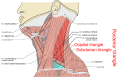 Labeled triangles of the neck
 -
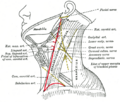 Anatomy of the neck showing the posterior triangle


Medical Disclaimer: WikiMD is for informational purposes only and is not a substitute for professional medical advice. Content may be inaccurate or outdated and should not be used for diagnosis or treatment. Always consult your healthcare provider for medical decisions. Verify information with trusted sources such as CDC.gov and NIH.gov. By using this site, you agree that WikiMD is not liable for any outcomes related to its content. See full disclaimer.
Credits:Most images are courtesy of Wikimedia commons, and templates, categories Wikipedia, licensed under CC BY SA or similar.
Translate page: - East Asian
中文,
日本,
한국어,
South Asian
हिन्दी,
தமிழ்,
తెలుగు,
Urdu,
ಕನ್ನಡ,
Southeast Asian
Indonesian,
Vietnamese,
Thai,
မြန်မာဘာသာ,
বাংলা
European
español,
Deutsch,
français,
Greek,
português do Brasil,
polski,
română,
русский,
Nederlands,
norsk,
svenska,
suomi,
Italian
Middle Eastern & African
عربى,
Turkish,
Persian,
Hebrew,
Afrikaans,
isiZulu,
Kiswahili,
Other
Bulgarian,
Hungarian,
Czech,
Swedish,
മലയാളം,
मराठी,
ਪੰਜਾਬੀ,
ગુજરાતી,
Portuguese,
Ukrainian

