Polyhydroxyalkanoates
Polyhydroxyalkanoates (PHA) are polyesters produced in nature by numerous microorganisms, including through bacterial fermentation of sugar or lipids. When produced by bacteria they serve as both a source of energy and as a carbon sink.
Production[edit]
PHA is produced by microorganisms (like Alcaligenes eutrophus or Ralstonia eutropha and Bacillus megaterium) under nutrient-limiting conditions with excess carbon. This process involves the conversion of carbon sources, like glucose, to PHA by the action of certain enzymes.
Structure[edit]
Polyhydroxyalkanoates are linear polyesters produced in nature by bacterial fermentation of sugar or lipids. They are produced by the bacteria to store carbon and energy. More than 150 different monomers can be combined within this family to give materials with extremely different properties. These plastics are biodegradeable and are used in the production of bioplastics.
Uses[edit]
PHA is used in the production of bioplastics. They are also used in the medical field for the production of sutures, slings, bone plates, and skin substitutes.
Environmental Impact[edit]
PHA is a biodegradable plastic that can be composted and digested. It does not produce toxic byproducts when degraded, unlike many other plastics.
See Also[edit]
 | This article about polymer science is a stub. You can help WikiMD by expanding the page. |
 | This medical article is a stub. You can help WikiMD by expanding the page. |
-
 Poly-(R)-3-hydroxybutyrate structure
 -
Polyhydroxyalkanoates
-
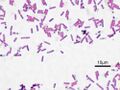 Bacillus subtilis Gram stain
 -
 Poly-3-hydroxyvalerate structure
 -
 Poly-4-hydroxybutyrate structure
-3-hydroxybutyrat.svg)


Medical Disclaimer: WikiMD is for informational purposes only and is not a substitute for professional medical advice. Content may be inaccurate or outdated and should not be used for diagnosis or treatment. Always consult your healthcare provider for medical decisions. Verify information with trusted sources such as CDC.gov and NIH.gov. By using this site, you agree that WikiMD is not liable for any outcomes related to its content. See full disclaimer.
Credits:Most images are courtesy of Wikimedia commons, and templates, categories Wikipedia, licensed under CC BY SA or similar.
Translate page: - East Asian
中文,
日本,
한국어,
South Asian
हिन्दी,
தமிழ்,
తెలుగు,
Urdu,
ಕನ್ನಡ,
Southeast Asian
Indonesian,
Vietnamese,
Thai,
မြန်မာဘာသာ,
বাংলা
European
español,
Deutsch,
français,
Greek,
português do Brasil,
polski,
română,
русский,
Nederlands,
norsk,
svenska,
suomi,
Italian
Middle Eastern & African
عربى,
Turkish,
Persian,
Hebrew,
Afrikaans,
isiZulu,
Kiswahili,
Other
Bulgarian,
Hungarian,
Czech,
Swedish,
മലയാളം,
मराठी,
ਪੰਜਾਬੀ,
ગુજરાતી,
Portuguese,
Ukrainian


