Polvorón

.JPG)

Polvorón is a type of shortbread that is popular in Spain, Latin America, and the Philippines. It is made from flour, sugar, milk, and nuts, most commonly almonds; however, other nuts such as hazelnuts or walnuts can also be used. The name polvorón comes from the Spanish word polvo, meaning powder or dust, which refers to the crumbly texture of the sweet.
History[edit]
The origins of polvorón can be traced back to Andalusia, Spain, during the time of Al-Andalus. It is believed that the Moors introduced this confection to the Iberian Peninsula. Over the centuries, the recipe for polvorón evolved, especially in the town of Estepa, which is renowned for its version of the treat. By the 16th century, polvorón had become a popular confection in Spain, and its popularity spread to the Spanish colonies, including the Philippines, where it has been adapted into local cuisine.
Ingredients and Preparation[edit]
The basic ingredients of polvorón include:
- Flour - traditionally, wheat flour is used, which is toasted before mixing with other ingredients.
- Sugar - provides sweetness to the confection.
- Milk - often, powdered milk is used to give the polvorón its distinctive flavor.
- Fat - usually, lard or vegetable shortening is used to bind the ingredients together. In some recipes, butter is used instead.
- Nuts - almonds are the most traditional, but variations with other nuts are also popular.
To prepare polvorón, the flour is first toasted until golden brown, then cooled. It is then mixed with the powdered milk, sugar, and finely ground nuts. Melted fat is added to the dry ingredients, and the mixture is combined until it achieves a sandy texture. The mixture is then pressed into molds to form compact, oval shapes. The polvorónes are then chilled to set before being wrapped in paper or cellophane.
Cultural Significance[edit]
In Spain, polvorónes are particularly associated with the Christmas season and are often enjoyed as part of the holiday festivities. In the Philippines, they are a popular treat for special occasions and are also given as gifts during the Christmas season. The making and sharing of polvorónes are seen as a way to celebrate cultural heritage and familial bonds.
Variations[edit]
There are several variations of polvorón, which include adding different flavors such as chocolate, vanilla, and cinnamon. Some versions incorporate other ingredients like cocoa powder, coconut, or even matcha to create a wide range of flavors. Each region may have its own unique take on the traditional polvorón recipe, reflecting local tastes and ingredients.
See Also[edit]
-
 Medina Sidonia
 -
 Polvoron
 -
 Polvorón de Tordesillas
 -
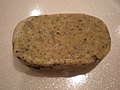 Goldilocks cookies n' cream polvoron
 -
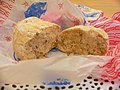 Polvorón de Estepa
 -
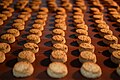 Polvorón 2
 -
 Polvorón 1
 -
 Dulce de Laroya
.JPG)


Ad. Transform your health with W8MD Weight Loss, Sleep & MedSpa

Tired of being overweight?
Special offer:
Budget GLP-1 weight loss medications
- Semaglutide starting from $29.99/week and up with insurance for visit of $59.99 and up per week self pay.
- Tirzepatide starting from $45.00/week and up (dose dependent) or $69.99/week and up self pay
✔ Same-week appointments, evenings & weekends
Learn more:
- GLP-1 weight loss clinic NYC
- W8MD's NYC medical weight loss
- W8MD Philadelphia GLP-1 shots
- Philadelphia GLP-1 injections
- Affordable GLP-1 shots NYC
|
WikiMD Medical Encyclopedia |
Medical Disclaimer: WikiMD is for informational purposes only and is not a substitute for professional medical advice. Content may be inaccurate or outdated and should not be used for diagnosis or treatment. Always consult your healthcare provider for medical decisions. Verify information with trusted sources such as CDC.gov and NIH.gov. By using this site, you agree that WikiMD is not liable for any outcomes related to its content. See full disclaimer.
Credits:Most images are courtesy of Wikimedia commons, and templates, categories Wikipedia, licensed under CC BY SA or similar.
Translate this page: - East Asian
中文,
日本,
한국어,
South Asian
हिन्दी,
தமிழ்,
తెలుగు,
Urdu,
ಕನ್ನಡ,
Southeast Asian
Indonesian,
Vietnamese,
Thai,
မြန်မာဘာသာ,
বাংলা
European
español,
Deutsch,
français,
Greek,
português do Brasil,
polski,
română,
русский,
Nederlands,
norsk,
svenska,
suomi,
Italian
Middle Eastern & African
عربى,
Turkish,
Persian,
Hebrew,
Afrikaans,
isiZulu,
Kiswahili,
Other
Bulgarian,
Hungarian,
Czech,
Swedish,
മലയാളം,
मराठी,
ਪੰਜਾਬੀ,
ગુજરાતી,
Portuguese,
Ukrainian
