Plant anatomy
Plant anatomy or phytotomy is the general term for the study of the internal structure of plants. Originally it included plant morphology, the description of the physical form and external structure of plants, but since the mid-20th century plant anatomy has been considered a separate field referring only to internal plant structure. Plant anatomy is now frequently investigated at the cellular level, and often involves the sectioning of tissues and microscopy.
History[edit]
The history of plant anatomy extends back to the earliest observations of plant structure, made by the earliest humans. Early human tribes were undoubtedly familiar with the external structure and appearances of their native plants, for their survival depended on knowing which plants were edible or had medicinal properties, and which were poisonous.
Plant cells[edit]
Plant cells are typically distinguished by their large water-filled central vacuole, chloroplasts, and rigid cell walls that are made up of cellulose, hemicellulose, and pectin. Plant cells are eukaryotic, because they have a nucleus. Their DNA is organized into chromosomes. Each plant cell has a cell wall, plasma membrane and cytoplasm. Within the cytoplasm are the different organelles.
Plant tissues[edit]
Plant tissues come in several forms: vascular, epidermal, ground, and meristematic. Each type of tissue consists of different types of cells, has different functions, and is located in different places.
Plant organs[edit]
In plants, just as in animals, similar cells working together form a tissue. When different types of tissues work together to perform a unique function, they form an "organ". Plants have only three types of organs: roots, stems, and leaves.
See also[edit]
References[edit]

This WikiMD article can only be edited by registered and verified editors. You can log in or register.
-
 Plant anatomy
 -
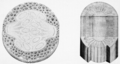 Plate from Grew's Anatomy
 -
 Root tip
 -
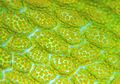 Mnium moss
 -
 Nehemiah Grew

.png)


Advertise on WikiMD — 81,000+ full articles, ~900,000 total pages, ~250 million page views. Global reach, limited time promotional rates from $1/page/day. Learn more · View stats

Translate page: - East Asian
中文,
日本,
한국어,
South Asian
हिन्दी,
தமிழ்,
తెలుగు,
Urdu,
ಕನ್ನಡ,
Southeast Asian
Indonesian,
Vietnamese,
Thai,
မြန်မာဘာသာ,
বাংলা
European
español,
Deutsch,
français,
Greek,
português do Brasil,
polski,
română,
русский,
Nederlands,
norsk,
svenska,
suomi,
Italian
Middle Eastern & African
عربى,
Turkish,
Persian,
Hebrew,
Afrikaans,
isiZulu,
Kiswahili,
Other
Bulgarian,
Hungarian,
Czech,
Swedish,
മലയാളം,
मराठी,
ਪੰਜਾਬੀ,
ગુજરાતી,
Portuguese,
Ukrainian
About WikiMD • Contact • Disclaimer • Privacy • Copyright • Site statistics
Some content and images may originate from Wikimedia Commons or Wikipedia and remain subject to their stated licenses. Unless otherwise noted, eligible WikiMD content is available under CC BY-SA 4.0.
WikiMD Wellnesspedia — Free health & wellness information for patients, students, and health professionals.

