Piña colada
.jpg)
Piña Colada is a classic tropical cocktail known for its smooth, creamy texture and sweet, fruity flavor. Typically made with white rum, coconut cream, and pineapple juice, it is often served blended with ice or shaken and garnished with a slice of pineapple or a maraschino cherry.
The cocktail is closely associated with beach vacations, Caribbean culture, and tropical relaxation. It is recognized as the national drink of Puerto Rico and has gained international popularity since its invention.
Etymology[edit]
The name "Piña Colada" comes from the Spanish language, meaning "strained pineapple," which refers to the freshly strained pineapple juice traditionally used in the drink.
History[edit]
The origins of the Piña Colada are widely attributed to Puerto Rico, although multiple establishments claim its creation. The most well-known story credits bartender Ramón "Monchito" Marrero at the Caribe Hilton Hotel in San Juan, Puerto Rico, with inventing the drink in 1954. Marrero reportedly developed the cocktail after experimenting for months to create a drink that captured the tropical flavors of the island.
Other Puerto Rican bars, including Barrachina in Old San Juan, also claim to have created the first Piña Colada. Meanwhile, historical accounts suggest that a similar drink may have been prepared in Cuba as early as the 1920s.
Ingredients[edit]
The traditional ingredients of a Piña Colada are:
- 2 oz (60 ml) white rum
- 3 oz (90 ml) Pineapple juice
- 1 oz (30 ml) Coconut cream
These ingredients are blended with ice until smooth. The result is a rich and creamy cocktail with a tropical flair.
Preparation[edit]
To make a classic Piña Colada:
- Add white rum, pineapple juice, and coconut cream into a blender.
- Add 1–2 cups of crushed ice.
- Blend until smooth and frothy.
- Pour into a chilled Hurricane glass or any tall cocktail glass.
- Garnish with a pineapple wedge, maraschino cherry, or a sprig of mint.
Variations[edit]
Several delicious variations of the Piña Colada have been created over the years, including:
- Strawberry Piña Colada: Blended with strawberries for a fruity twist.
- Mango Piña Colada: Includes mango puree or juice for a more tropical flavor.
- Frozen Piña Colada: Uses frozen fruit or ice for a slushier consistency.
- Virgin Piña Colada: A non-alcoholic version using the same ingredients without rum.
Cultural Significance[edit]
The Piña Colada is more than just a cocktail—it is a symbol of Caribbean hospitality and leisure. It has become synonymous with vacation culture, and its popularity was boosted by the 1979 pop hit "Escape (The Piña Colada Song)" by Rupert Holmes, which romanticized the drink and embedded it in global pop culture.
National Recognition[edit]
- The Piña Colada was officially declared the national drink of Puerto Rico in 1978.
- The Caribe Hilton Hotel, often considered the birthplace of the cocktail, commemorates its creation with a historical plaque.
- National Piña Colada Day is celebrated annually on July 10.
Health Considerations[edit]
While Piña Coladas are a delicious tropical treat, they are relatively high in calories and sugar. A single serving may contain over 300 calories, primarily from the coconut cream and pineapple juice. For a lighter version:
- Substitute coconut cream with light coconut milk or coconut water.
- Use unsweetened pineapple juice.
- Reduce or omit additional sweeteners or syrups.
Serving and Presentation[edit]

Piña Coladas are typically served in tall glasses like the Hurricane glass or collins glass, but for a more festive presentation, they may also be served in a hollowed-out pineapple. Garnishes often include tropical fruits such as:
- Pineapple wedges
- Maraschino cherries
- Coconut shavings
- Mint sprigs
- Umbrella picks or decorative straws
Trivia[edit]
- The Piña Colada has inspired a wide range of products, from ice cream and candles to lip balm and shampoo.
- It gained popularity in the United States following its debut at the 1959 World’s Fair in New York.
- Bartenders around the world continue to innovate with Piña Colada variations in mixology competitions.
Gallery[edit]
-
 The key ingredients: white rum, pineapple juice, and coconut cream
 -
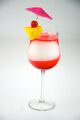 A refreshing Strawberry Piña Colada

.jpg)
See Also[edit]
External Links[edit]

Medical Disclaimer: WikiMD is for informational purposes only and is not a substitute for professional medical advice. Content may be inaccurate or outdated and should not be used for diagnosis or treatment. Always consult your healthcare provider for medical decisions. Verify information with trusted sources such as CDC.gov and NIH.gov. By using this site, you agree that WikiMD is not liable for any outcomes related to its content. See full disclaimer.
Credits:Most images are courtesy of Wikimedia commons, and templates, categories Wikipedia, licensed under CC BY SA or similar.
Translate page: - East Asian
中文,
日本,
한국어,
South Asian
हिन्दी,
தமிழ்,
తెలుగు,
Urdu,
ಕನ್ನಡ,
Southeast Asian
Indonesian,
Vietnamese,
Thai,
မြန်မာဘာသာ,
বাংলা
European
español,
Deutsch,
français,
Greek,
português do Brasil,
polski,
română,
русский,
Nederlands,
norsk,
svenska,
suomi,
Italian
Middle Eastern & African
عربى,
Turkish,
Persian,
Hebrew,
Afrikaans,
isiZulu,
Kiswahili,
Other
Bulgarian,
Hungarian,
Czech,
Swedish,
മലയാളം,
मराठी,
ਪੰਜਾਬੀ,
ગુજરાતી,
Portuguese,
Ukrainian

