Phyllanthus emblica
Phyllanthus emblica, also known as the Indian gooseberry or amla, is a deciduous tree of the family Phyllanthaceae. It is known for its edible fruit of the same name.
Description[edit]
The Phyllanthus emblica tree is small to medium in size, reaching 1 to 8 m in height. The tree's bark is smooth and gray, with hard, white wood. The leaves are simple, sub-sessile and closely set along branchlets, light green in color. The flowers are greenish-yellow. The fruit is nearly spherical, light greenish yellow, quite smooth and hard on appearance, with six vertical stripes or furrows.
Distribution and habitat[edit]
Phyllanthus emblica is native to tropical Southeast Asia, including India, Nepal, Sri Lanka, Malaysia, and the Andaman Islands. It is also cultivated in regions of Middle East and Americas for its fruit. The tree grows in both humid and dry climates, and is found in forests, grasslands, and shrublands.
Uses[edit]
The amla fruit is used in Ayurveda, the traditional Indian system of medicine. It is high in Vitamin C and other antioxidants, and is believed to have several health benefits. The fruit is also used in various culinary preparations, including pickles, jams, and sweets. In addition, the tree's wood is used for firewood and woodworking.
Cultivation[edit]
Phyllanthus emblica is propagated by seed or by cuttings. The tree prefers full sun and well-drained soil. It is drought-tolerant and can grow in nutritionally poor soil.
Research[edit]
Research on Phyllanthus emblica includes studies on its potential anti-cancer properties, its effects on blood glucose levels, and its potential as a treatment for various diseases.
See also[edit]
References[edit]
 | This medical article is a stub. You can help WikiMD by expanding the page. |
-
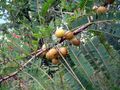 Phyllanthus emblica
 -
 Phyllanthus emblica - whole and cross section


Medical Disclaimer: WikiMD is for informational purposes only and is not a substitute for professional medical advice. Content may be inaccurate or outdated and should not be used for diagnosis or treatment. Always consult your healthcare provider for medical decisions. Verify information with trusted sources such as CDC.gov and NIH.gov. By using this site, you agree that WikiMD is not liable for any outcomes related to its content. See full disclaimer.
Credits:Most images are courtesy of Wikimedia commons, and templates, categories Wikipedia, licensed under CC BY SA or similar.
Translate page: - East Asian
中文,
日本,
한국어,
South Asian
हिन्दी,
தமிழ்,
తెలుగు,
Urdu,
ಕನ್ನಡ,
Southeast Asian
Indonesian,
Vietnamese,
Thai,
မြန်မာဘာသာ,
বাংলা
European
español,
Deutsch,
français,
Greek,
português do Brasil,
polski,
română,
русский,
Nederlands,
norsk,
svenska,
suomi,
Italian
Middle Eastern & African
عربى,
Turkish,
Persian,
Hebrew,
Afrikaans,
isiZulu,
Kiswahili,
Other
Bulgarian,
Hungarian,
Czech,
Swedish,
മലയാളം,
मराठी,
ਪੰਜਾਬੀ,
ગુજરાતી,
Portuguese,
Ukrainian

