Phoxim
Phoxim is an organophosphate insecticide that is used in agriculture to control pests on a wide variety of crops. It is also used in veterinary medicine to control external parasites on animals.
Chemistry[edit]
Phoxim is a member of the organophosphate class of chemicals, which are known for their ability to inhibit the activity of acetylcholinesterase, an enzyme that is essential for normal nerve function. The chemical formula for phoxim is C12H15N2O3PS. It is a colorless to amber liquid with a mild, pleasant odor.
Uses[edit]
Phoxim is used in agriculture to control a wide variety of pests, including aphids, mites, and whiteflies. It is applied to crops either by spraying or by soil application. In veterinary medicine, phoxim is used to control external parasites on animals, such as fleas, ticks, and lice.
Toxicity[edit]
Like other organophosphates, phoxim is toxic to humans and animals. It can cause a range of symptoms, from mild irritation of the skin and eyes to severe effects on the nervous system, including seizures and even death. The LD50 (lethal dose for 50% of the population) for phoxim in rats is 130 mg/kg.
Environmental Impact[edit]
Phoxim is highly toxic to aquatic organisms and bees. It can contaminate water bodies and harm non-target organisms. It is also persistent in the environment, with a half-life in soil of up to 100 days.
Regulation[edit]
In many countries, the use of phoxim is regulated due to its potential to harm human health and the environment. In the European Union, for example, phoxim is not approved for use as a pesticide.
See Also[edit]


This pesticide-related article is a stub. You can help WikiMD by expanding it.
Phoxim[edit]
-
 Phoxim 2D by AHRLS 2012
 -
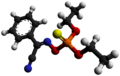 Phoxim 3D balls by AHRLS 2012


Medical Disclaimer: WikiMD is for informational purposes only and is not a substitute for professional medical advice. Content may be inaccurate or outdated and should not be used for diagnosis or treatment. Always consult your healthcare provider for medical decisions. Verify information with trusted sources such as CDC.gov and NIH.gov. By using this site, you agree that WikiMD is not liable for any outcomes related to its content. See full disclaimer.
Credits:Most images are courtesy of Wikimedia commons, and templates, categories Wikipedia, licensed under CC BY SA or similar.
Translate page: - East Asian
中文,
日本,
한국어,
South Asian
हिन्दी,
தமிழ்,
తెలుగు,
Urdu,
ಕನ್ನಡ,
Southeast Asian
Indonesian,
Vietnamese,
Thai,
မြန်မာဘာသာ,
বাংলা
European
español,
Deutsch,
français,
Greek,
português do Brasil,
polski,
română,
русский,
Nederlands,
norsk,
svenska,
suomi,
Italian
Middle Eastern & African
عربى,
Turkish,
Persian,
Hebrew,
Afrikaans,
isiZulu,
Kiswahili,
Other
Bulgarian,
Hungarian,
Czech,
Swedish,
മലയാളം,
मराठी,
ਪੰਜਾਬੀ,
ગુજરાતી,
Portuguese,
Ukrainian

